A consultant dermatologist’s guide from Self London, explaining what the new international expert consensus means for patients with melasma, post-inflammatory hyperpigmentation, and skin of colour.
By Dr Anjali Mahto, Consultant Dermatologist
Key Takeaways
- The sun produces approximately nine times more visible light than ultraviolet (UV) radiation.
- Visible light is now recognised as a major contributor to pigmentation concerns, including melasma and post-inflammatory hyperpigmentation, particularly in Fitzpatrick skin types III–VI.
- Traditional SPF and UVA ratings do not measure visible light protection, despite visible light being responsible for much of this pigmentation damage.
- A 2026 international consensus published in the Journal of Investigative Dermatology recommends tinted sunscreens containing iron oxides as the gold standard for visible light protection.
- Ideally, tinted sunscreens should filter at least 60% of high-energy visible (HEV) light.
- Blue light from phones, tablets and laptops is not considered a significant clinical concern, as sunlight is estimated to be 100–1,000 times more intense than screen-emitted visible light.
- Antioxidants such as topical vitamin C and oral Polypodium leucotomos may provide additional support for patients prone to persistent pigmentation.
- For individuals managing melasma, post-acne pigmentation, or recovery following laser treatments, this represents one of the most important updates to sun protection guidance in recent years.
The question I am asked most often in clinic
Patients with melasma and post-inflammatory hyperpigmentation often arrive at Self London frustrated because they have done everything they were told to do, wearing SPF 50 every day, reapplying it as instructed, and being scrupulously diligent about the routine, only to find that the pigmentation is not improving or that it returns within weeks of completing a course of treatment. The conversation that follows is almost always the same, which is that the sunscreen they are using is doing exactly what it was designed to do, namely, block ultraviolet light, but the underlying problem is that ultraviolet light is not the only thing driving their pigmentation, and the rest of the relevant spectrum is going almost entirely unprotected.
Sun protection advice has focused on ultraviolet radiation for decades, and there are good reasons for that focus, since UVA and UVB are responsible for burning, photoageing and the great majority of skin cancers, with every SPF product on the market specifically engineered to filter them. What most patients are not told, however, is that ultraviolet radiation makes up only around 5% of the solar energy reaching the skin, whereas visible light, the part of the spectrum that human eyes can actually see, accounts for roughly 45%, and although it was assumed for many years that visible light was biologically inert as far as skin was concerned, that assumption has now been formally retired.
An international panel of photodermatology and photobiology experts published the first global consensus statement on visible light photoprotection in the Journal of Investigative Dermatology in March 2026, voting on twenty-seven statements across five themes, with twenty-four of those statements achieving formal consensus. This represents the most clinically significant update on photoprotection in several years for patients with melasma, post-inflammatory hyperpigmentation, acne scarring, or any Fitzpatrick skin type of III or above, and the rest of this article walks through what the consensus said, what it means for your skincare routine, and how I have incorporated it into our pigmentation and melasma protocols at Self London.
What does visible light actually do to the skin?
Visible light is defined clinically as the wavelength range from 400 to 700 nanometres, with the shortest and highest-energy portion, between roughly 400 and 450 nanometres, known as high-energy visible light or HEVL, sitting directly adjacent to UVA on the electromagnetic spectrum. What makes visible light clinically relevant is that it penetrates deeper into the skin than ultraviolet radiation does and interacts directly with melanocytes, the cells responsible for producing pigment, which means that its effects are concentrated precisely where pigmentation problems originate.
The consensus panel agreed unanimously that visible light induces oxidative stress in skin cells, and with high levels of agreement that it also causes inflammation and indirect DNA damage through reactive oxygen species. More importantly for our patients, the panel confirmed that visible light induces hyperpigmentation in melanocompetent skin, meaning Fitzpatrick skin types III through VI, a category that includes the majority of Mediterranean, Middle Eastern, South Asian, Latin American, East Asian and Black skin tones, where visible light alone is sufficient to trigger a darkening response that can persist for weeks. Erythema, or redness, is also induced by visible light across all skin types, with the effect amplified when visible light acts alongside UVA, which it always does in natural sunlight.
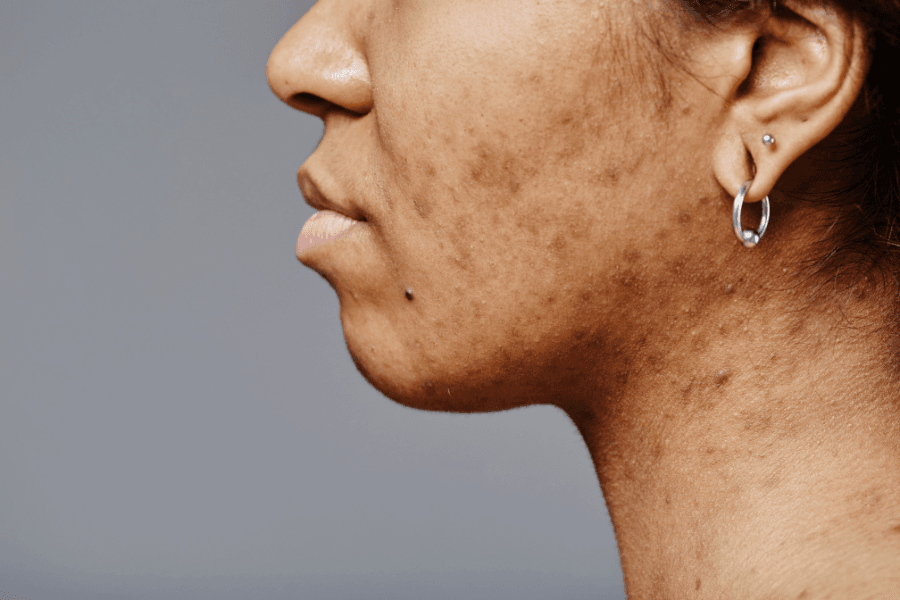
The most clinically important agreement, reached with 97% consensus, was that visible light worsens hyperpigmentation disorders characterised by overproduction of melanin, which is the formal scientific basis for what we see every week in clinic. Conditions affected include melasma, lichen planus pigmentosus, maturational hyperpigmentation, and post-inflammatory hyperpigmentation following acne, trauma, peels or laser treatment, so if you have any of these conditions then visible light is part of your clinical picture, and a conventional ultraviolet-only sunscreen is not providing the protection you actually need.
One widespread concern deserves to be addressed directly because patients ask about it constantly, which is whether the visible light coming from phones and laptops is doing meaningful harm to their skin. The 2026 consensus was unambiguous on this point, agreeing with 94% support that only visible light from the sun has been shown to have a clinically meaningful impact on the skin, because the intensity of high-energy visible light from sunlight is roughly 100 to 1,000 times greater than that emitted by phones, laptops and other personal devices, and direct clinical studies have specifically shown that screen exposure does not worsen melasma. Anyone who has been spending money on blue-light blocking skincare on the basis of screen use has been responding to a marketing claim rather than to clinical evidence, and the sun remains the only source that genuinely matters.
Who actually needs visible light protection?
One of the most useful parts of the consensus was the distinction it drew between groups for whom visible light protection is genuinely recommended and the wider population for whom the case is currently less clear, with the panel formally recommending visible light photoprotection for three specific groups that map closely onto the patients we see most often at Self London.
Melanocompetent individuals, meaning anyone with Fitzpatrick skin types III to VI, are the first of those groups because they are at meaningful risk of visible-light-induced pigmentation. The second group consists of anyone who has, or is at risk of developing, a melanin hyperpigmentary disorder, which in our clinic is predominantly patients with melasma and patients with post-inflammatory hyperpigmentation, particularly following acne or procedural treatments such as laser, microneedling or peels. The third group is patients with specific photodermatoses, including cutaneous porphyrias and many cases of solar urticaria, for whom visible light protection is essential clinical care rather than an optional refinement to an existing routine.
Interestingly, the panel did not reach a formal consensus that visible light protection should be recommended for absolutely everyone, since the majority supported the idea but the threshold for formal agreement was not met, with the panel reasoning that for fair-skinned patients without underlying pigmentary or photosensitive conditions the current evidence base is less compelling and that the field should not be driving unnecessary product purchases.
Anyone reading this and recognising themselves in any of those three groups, however, should treat this as the moment to consider whether their current routine is doing what it needs to do, and have their full routine reviewed against the latest evidence, and many of our patients are surprised at how much of their existing skincare expenditure has been directed at the wrong category of product.
What actually protects against visible light?
This is where the practical advice diverges most sharply from what most patients assume, since SPF measures protection against UVB and the UVA star rating measures UVA, but neither of these values tells you anything at all about visible light protection, which means that a sunscreen can carry SPF 50+ and a five-star UVA rating and still allow visible light through almost completely, and that is exactly what most clear, untinted sunscreens do.
The consensus panel was unambiguous that comprehensive photoprotection requires more than sunscreen alone, with the full recommendation including seeking shade when outdoors, wearing photoprotective clothing, using sunglasses, wearing a wide-brimmed hat, and applying sunscreen to areas that remain exposed. This matters particularly for patients with melasma, where heat and visible light exposure can undo months of treatment in a single weekend, and the sunscreen should therefore be understood as one layer in a broader strategy rather than as the entire strategy by itself.
Tinted sunscreens are the current gold standard for visible light protection within the sunscreen layer specifically, with the active ingredient doing the work being iron oxide, usually combined with non-nano titanium dioxide. Iron oxides occur naturally in three colours, namely black, red and yellow, and are blended in different proportions to match different skin tones, where they physically absorb and scatter visible light in a way that the clear chemical filters in conventional sunscreens simply cannot. An invisible sunscreen, however cosmetically elegant it may be, provides almost no visible light protection, which is why the consensus proposed that for a sunscreen to legitimately claim visible light protection it should filter at least 60% of high-energy visible light transmittance, a bar that most products currently on the market do not meet.
The panel also agreed that non-filtering ingredients can meaningfully contribute to protection and recovery from visible-light-induced effects, with the strongest evidence supporting topical vitamins C, E and B3, the latter also known as niacinamide, along with green tea polyphenols and N-acetylcysteine. The agents with the best evidence on the oral side are Polypodium leucotomos extract, a fern-derived antioxidant shown to reduce visible-light-induced pigmentation and delayed tanning, and oral nicotinamide. These are adjuncts rather than replacements for a tinted sunscreen, and at Self London we use them within our melasma and pigmentation treatment protocols rather than in isolation, because the right combination depends on the type, depth and chronicity of the pigment, which is something we assess clinically rather than guess at.
How we treat pigmentation and melasma at Self London
Sun protection is the foundation of pigmentation care, but the candid reality is that photoprotection on its own will not clear pigmentation that is already established, and patients who have been told otherwise have usually been let down by oversimplified advice. The treatment of melasma and post-inflammatory hyperpigmentation is multi-modal, sequenced, and tailored to the individual patient, and at Self London we draw on a defined set of interventions that we combine depending on what the skin actually needs.
The starting point is always a full consultation and diagnosis, because pigmentation that looks similar on the surface can have very different causes underneath, ranging from epidermal melasma to dermal melasma to mixed-type disease, alongside post-inflammatory marks, lichen planus pigmentosus, drug-induced hyperpigmentation, and several less common conditions that are often misdiagnosed by non-specialists. Getting the diagnosis right is the difference between a treatment plan that works and a treatment plan that drives the pigmentation deeper or makes it worse, which happens more often than it should when patients have been treated empirically by therapists without dermatological training.
Prescription topicals form the backbone of most pigmentation regimens, and the toolkit includes hydroquinone in carefully managed courses, tranexamic acid in topical formulation, retinoids such as tretinoin, azelaic acid, kojic acid, and combination prescription products such as triple-combination creams, all chosen based on the skin type, the depth of pigment, and the patient’s previous treatment history. These are prescription medications and require clinical oversight, since hydroquinone in particular has clear rules around duration and concentration that need to be respected if the treatment is to be safe and durable.
Chemical peels are a useful intermediate step for the right patient and are particularly effective for epidermal pigmentation, with mandelic acid, glycolic acid, salicylic acid and combination peels each having different roles depending on skin type and tolerance. Peels in skin of colour need to be selected and dosed carefully because the wrong choice can trigger more pigmentation than it resolves, which is one of the most common reasons patients arrive at us having had a setback elsewhere.
Lasers and energy-based devices are the area where pigmentation treatment has advanced most in the last decade, but they are also the area where the highest risk sits, particularly in skin of colour where inappropriate device settings can cause severe post-inflammatory hyperpigmentation. The devices we use in clinic are chosen specifically for their safety profile across skin types, and we are conservative about laser-based pigmentation treatment until topical and procedural foundations have been put in place, because laser is most effective as the final step of a properly sequenced plan rather than the first reach.
Oral medications have a defined role in melasma in particular, with oral tranexamic acid being the most evidence-based option, alongside oral Polypodium leucotomos as a supportive antioxidant, and occasional use of other systemic agents in carefully selected cases. Oral tranexamic acid requires medical assessment before prescribing because there are specific contraindications, and this is the kind of decision that needs a consultant dermatologist rather than a non-prescriber.
Most pigmentation patients are managed with a combination of these modalities rather than any single one, with a typical melasma plan involving daily tinted sunscreen, a prescription topical regimen, a course of peels at defined intervals, occasionally oral tranexamic acid, and a long-term maintenance phase to prevent recurrence. Acne scarring with associated post-inflammatory pigmentation often requires the pigmentation to be addressed first before scar revision work can be done safely, which is why the assessment and sequencing of treatment matters as much as the treatments themselves.
Frequently asked questions
Does SPF 50 sunscreen protect against visible light?
No, unless the sunscreen is tinted with iron oxides, since SPF and UVA star ratings only measure ultraviolet protection. Visible light protection is a separate property of the formulation, and it almost always comes from iron oxide pigments rather than from conventional ultraviolet filters such as avobenzone, octocrylene or uncoated zinc oxide, which means that a high SPF number is no guarantee of protection against the spectrum that drives pigmentation.
Is blue light from my phone or laptop damaging my skin?
The current evidence says no, since high-energy visible light from sunlight is 100 to 1,000 times more intense than what comes off a screen, and direct clinical studies have confirmed that screen exposure does not worsen melasma. The 2026 international consensus formally agreed on this point, and blue-light blocking skincare aimed at screen use is not evidence-based, regardless of how heavily it has been marketed in recent years.
What is the best tinted sunscreen for melasma in the UK?
The best tinted sunscreen for melasma is one that contains iron oxides, offers broad-spectrum SPF 50, has a high UVA rating, and carries a tint that matches your skin tone closely enough that you will actually wear it daily without compromise. At Self London we recommend specific products to patients during consultation based on their skin type and tolerance, because compliance matters more than the product on paper, and the best sunscreen is ultimately the one you will actually use every day.
Do I need a tinted sunscreen if I have fair skin?
The clinical case is weaker for fair skin without pigmentary concerns, so if you have very fair skin and no melasma, no post-inflammatory pigmentation, and no photosensitive condition, then comprehensive ultraviolet protection remains the priority for you. Tinted protection is a reasonable addition, but it is not the same clinical necessity it is for darker skin tones or for patients with active pigmentation, where the case for it becomes much harder to argue against.
I have melasma. What should my sunscreen routine actually look like?
The foundation of any melasma routine is a tinted sunscreen containing iron oxides, applied generously every morning and reapplied every two hours during sun exposure, combined with shade, a wide-brimmed hat, and ideally a topical antioxidant such as vitamin C applied underneath the sunscreen. Oral antioxidants such as Polypodium leucotomos extract may also be added depending on your clinical picture, and treatment of the underlying pigmentation is a separate conversation that depends on the type and depth of the pigment, which is something we manage as part of a structured pathway at Self London.
Do I still need sunscreen on cloudy or winter days?
Yes, because visible light reaches the ground in substantial quantities even on overcast days and also passes through windows, which means that the daily habit matters more than the visibility of the sun on any given day, particularly for patients with melasma. Many of our patients see their pigmentation worsen during winter precisely because they have stopped wearing sunscreen during the months when they assumed they did not need it.
Can pigmentation be treated, or is sun protection only for prevention?
Both, because sun protection prevents pigmentation from worsening and protects the results of any treatment you undergo, but it does not treat existing pigmentation on its own. At Self London, we combine evidence-based photoprotection with prescription topical treatments, chemical peels, laser treatment where appropriate, and oral medications such as tranexamic acid in selected cases, because visible light protection is the foundation of any pigmentation plan but the active treatments are what actually remove the marks already present.
How we use this at Self London
The publication of an international consensus is a useful moment in dermatology because it means a previously fragmented field has agreed on the fundamentals, and for patients this should translate into clearer advice and, over time, better products alongside standardised testing so that “visible light protection” on a label means something measurable rather than something marketed. We have integrated these recommendations into how we counsel patients on photoprotection at Self London, particularly those seen for melasma, post-inflammatory hyperpigmentation, acne scarring with associated pigment, and laser aftercare, and for patients with skin of colour this is now a routine part of every consultation because the consensus has formalised what experienced clinicians treating skin of colour have understood for years.
Anyone whose pigmentation is not responding to their current routine, or who is about to start a course of laser, peels or microneedling and wants to protect the results, should consider booking a consultation, because that allows us to assess your skin properly and build a protocol around the actual cause rather than around the surface presentation.
Further reading and references
Lim, H. W. and colleagues (2026). International modified Delphi consensus statement on visible light photoprotection: Effects, measurement, and recommendations. Journal of Investigative Dermatology. doi: 10.1016/j.jid.2026.03.012. The primary source for this article, summarising the international consensus position on visible light, its effects on skin, and recommended protection strategies.
Passeron, T. and colleagues (2021). Photoprotection according to skin phototype and dermatoses: practical recommendations from an expert panel. Journal of the European Academy of Dermatology and Venereology. The earlier expert panel statement that informed much of the 2026 consensus.
Dumbuya, H. and colleagues (2020). Impact of iron-oxide containing formulations against visible light-induced skin pigmentation in skin of colour individuals. Journal of Drugs in Dermatology, 19, 712 to 717. The key clinical study underpinning the recommendation of iron-oxide tinted sunscreens for skin of colour.
Mohammad, T. F. and colleagues (2019). Oral Polypodium leucotomos extract and its impact on visible light-induced pigmentation in human subjects. Journal of Drugs in Dermatology. Evidence base for the use of oral Polypodium leucotomos in patients with visible-light-driven pigmentation.