Written by Dr Anjali Mahto, Consultant Dermatologist (FRCP), Founder of Self London.
Key takeaways
- Chronic poor sleep is linked to faster visible skin ageing and a weaker, slower-healing skin barrier.
- The effect is real but moderate, it acts over years, and it sits well below sun exposure in what ages skin most.
- Skin does most of its repair overnight, driven by growth hormone, melatonin and its own internal body clock.
- A single bad night causes reversible tiredness, not lasting ageing.
- Good sleep protects and maintains skin, it does not reverse established ageing, and no product replaces it.
I am asked about sleep more often than almost any other lifestyle factor, usually by patients who have invested heavily in their skincare and want to know whether late nights are quietly undoing the work. It is a fair question, and a more interesting one than it first appears. Sleep has become the wellness industry’s favourite talking point, wrapped in the language of “beauty sleep” and overnight miracle creams, and a good deal of what is claimed is marketing rather than medicine. My job here is to separate the two, to look honestly at what the science does and does not show, and to explain what it means for your skin.
The short answer is that yes, there is reasonable evidence that chronically poor sleep is associated with faster visible ageing and a less resilient skin barrier. The longer and more useful answer is about why that happens, how much of it you can actually influence, and where sleep sits among the other things that age skin. Sleep matters, but it is one lever among several, and it is rarely the most powerful one.
What your skin is actually doing while you sleep
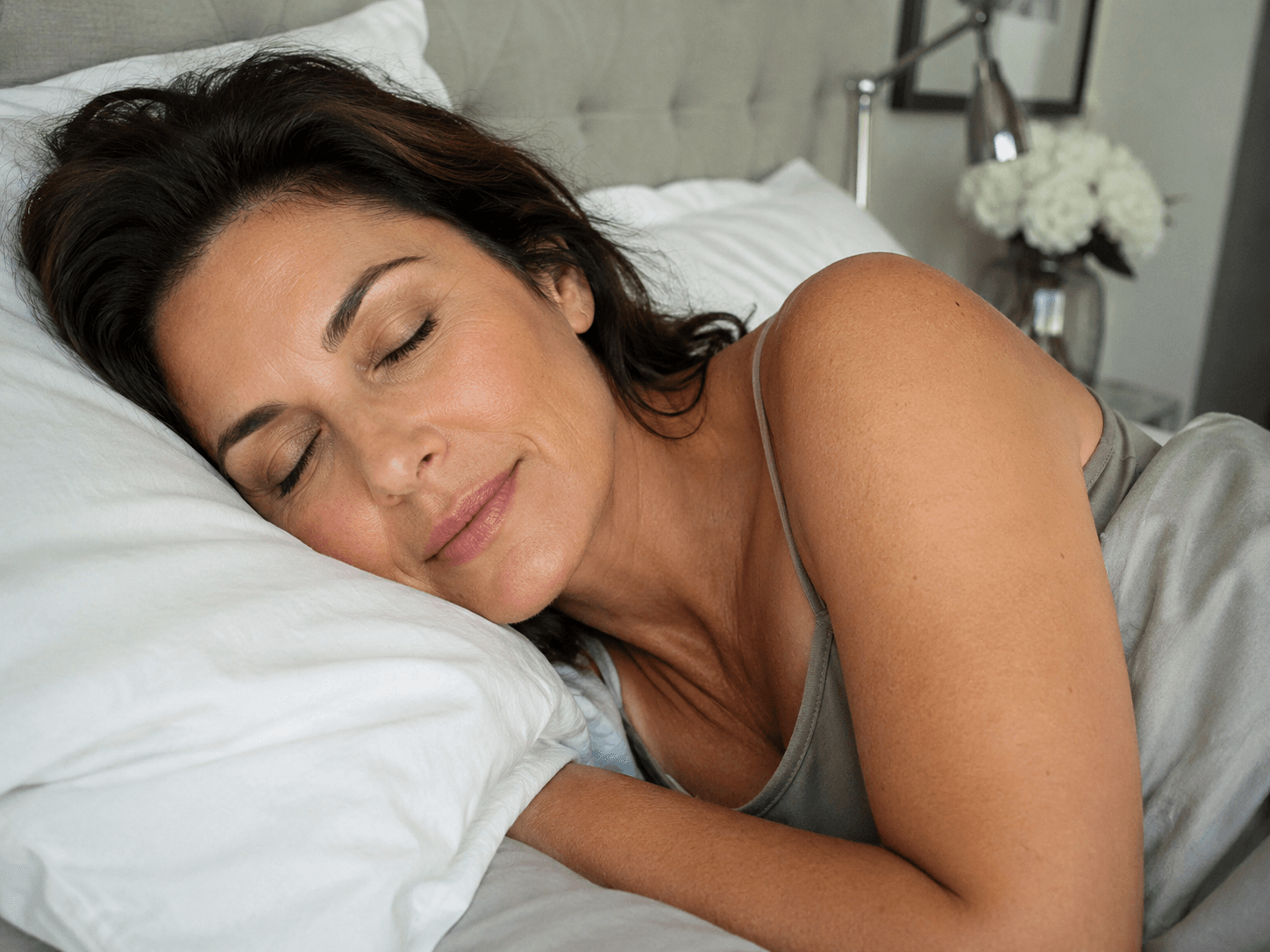
Skin is not passive overnight. It runs on its own internal clock, a peripheral circadian rhythm that is partly synchronised to the brain’s master clock and partly able to keep time on its own. This rhythm governs when skin cells divide, when the barrier repairs itself, how much water the skin loses, and when its DNA-repair machinery is most active. The practical consequence is that skin has a daytime mode geared towards protection and a night-time mode geared towards repair and renewal.
Several repair processes ramp up during the hours we are normally asleep. Keratinocytes and fibroblasts, the cells that build the outer skin and its collagen scaffolding, reach peak activity at night. Growth hormone, which supports tissue repair and collagen production, is released in its largest pulses during deep slow-wave sleep. Melatonin rises in darkness and behaves as a useful antioxidant within the skin, helping to mop up the free radicals generated by daytime exposure to ultraviolet light and pollution. Cell turnover and barrier recovery both run faster during this rest phase than they do during the day.
Lose enough of that repair window, or fragment it badly, and the arithmetic starts to work against you. Skin that should have spent the night rebuilding collagen and restoring its barrier instead carries the previous day’s damage into the next one. Do this for a single night and the effect is trivial and fully recoverable. Do it for years, which is the reality for many of my patients with insomnia, small children, demanding jobs or perimenopausal sleep disruption, and the small nightly deficits begin to accumulate.
What the evidence actually shows
The most frequently cited study in this area is a 2015 paper in Clinical and Experimental Dermatology, which compared 60 women aged between 30 and 49 who were classified as either good or poor sleepers. The researchers scored visible ageing using a validated tool called SCINEXA and tested the skin’s resilience in several ways. The poor sleepers had markedly higher intrinsic ageing scores, with an average of 4.4 compared with 2.2 in the good sleepers, meaning more fine lines, more uneven pigmentation and slacker skin. The poor sleepers also lost more water through the skin at baseline, recovered far less well after the barrier was deliberately disrupted, and healed more slowly after a measured dose of ultraviolet light.
Two numbers from that study are worth holding onto. Good sleepers recovered roughly 30% more barrier function in the three days after the skin was stripped, and they recovered better from ultraviolet-induced redness within twenty-four hours. Those findings fit the biology neatly, because they are exactly what you would expect if poor sleep were eroding the skin’s overnight repair capacity. The same participants who slept well also rated their own appearance and attractiveness more highly, which is a softer outcome but not a meaningless one.
I always add a few honest caveats when I describe this work, because that is what separates evidence from marketing. The study was small, it looked only at women, and it was carried out with involvement from a skincare manufacturer, all of which means it should be read as suggestive rather than definitive. It shows an association, not proof that poor sleep directly caused the ageing, and people who sleep badly often differ in other ways that also affect skin. None of that makes the findings worthless. It simply means we should treat them as one consistent piece of a larger and still-growing picture.
That larger picture has been filling in steadily. A separate strand of research, including a well-known 2010 study published in the BMJ, has shown that people photographed after sleep deprivation are reliably judged by others as looking more tired, less healthy and less attractive than the same people photographed after normal sleep. A 2025 review of the so-called sleep–skin axis drew the field together and concluded that disrupted or insufficient sleep can compromise the skin barrier and impair collagen production, cellular repair and wound healing. The direction of travel in the literature is consistent, even where the individual studies are small.
The cortisol problem
Much of the damage attributed to poor sleep runs through a single hormone. Cortisol follows a daily rhythm, peaking in the morning to get us going and falling away in the evening so the body can rest and repair. Sleep deprivation disturbs that rhythm and tends to keep cortisol higher than it should be overnight. Sustained high cortisol is a problem for skin, because it promotes inflammation and activates enzymes called matrix metalloproteinases, which break down the collagen and elastin that keep skin firm and springy.
The result is a kind of double penalty. Poor sleep reduces the collagen-building that should happen at night, through lower growth hormone and a shortened repair window, while raised cortisol simultaneously increases collagen breakdown. Build less and lose more, repeat the pattern over months and years, and the visible consequences are thinner, less elastic, more crepey skin. This is the most biologically plausible route by which genuinely chronic poor sleep could accelerate intrinsic ageing.
Tired skin versus aged skin
A distinction matters here, and patients are often relieved to hear it. The face after one or two bad nights looks tired rather than older, and that is a different and entirely reversible thing. Dark circles deepen because the thin skin under the eyes shows dilated blood vessels and pooled fluid more readily when you are run down. Puffiness reflects fluid balance and sluggish lymphatic drainage rather than fat or true ageing. Skin can look dull and flat because blood flow and cell turnover dip. All of this recovers with a couple of good nights, and none of it is permanent.
Persistent ageing change is what accumulates when poor sleep becomes a way of life rather than an occasional event. The honest position is that a late night before an event will cost you a fresh complexion the next morning and nothing more, whereas years of five-hour nights may make a measurable contribution to how your skin ages. Knowing which problem you actually have prevents a great deal of wasted money. No eye cream corrects a fluid and pigment issue driven by exhaustion, and no serum rebuilds collagen lost to a decade of broken sleep.
Can you catch up at the weekend?
A question I am asked constantly is whether a long weekend lie-in repairs the damage of a bad week. The reassuring part is that skin is forgiving of the occasional bad night, and a stretch of good sleep does help you recover. The less reassuring part is that erratic sleep, with short weeknights and long weekend recoveries, keeps the body clock in a state of mild permanent jet lag, and that irregularity is itself a stressor. Consistency beats catching up. A naturally short but regular sleeper will usually have healthier skin than someone whose nights swing wildly between four hours and ten, and a twenty-minute afternoon nap, while useful for alertness, does not deliver the deep, hormone-driven repair of a proper night.
Do sleep lines and your sleeping position matter?
Patients often ask whether the way they sleep is etching lines into their face. Pressing the same side of your face into a pillow night after night does create temporary sleep lines, and over many years that repeated mechanical compression may contribute to certain creases, particularly on the side you favour and on the chest. The evidence for this is modest rather than strong, so it deserves a sense of proportion rather than alarm. Sleeping on your back can help if it comes naturally to you, and a silk or satin pillowcase is a harmless option, although the claim that it prevents wrinkles is marketing enthusiasm rather than established fact. The far bigger levers remain how much you sleep, how consistently, and how well you protect your skin during the day.
Sleep, inflammation and skin conditions
Sleep does not only influence ageing. It influences the skin conditions I treat every day, and this is where the consequences can be most immediate. Poor and fragmented sleep raises systemic inflammation, and inflammatory skin diseases tend to behave worse in that setting. Acne, rosacea, eczema and psoriasis all flare more readily when sleep is disrupted, partly through the same cortisol and inflammatory pathways and partly because tired, stressed skin has a weaker barrier. There is also evidence linking poorer sleep quality to higher facial sebum and more active acne, which will not surprise anyone who has watched their skin worsen during an exam period or a run of night shifts.
This matters for ageing too, because chronic low-grade inflammation is itself one of the engines of skin ageing, sometimes called inflammaging. A barrier that is persistently inflamed and poorly repaired is more vulnerable to the daily assault of ultraviolet light and pollution, and that vulnerability compounds over time. Looking after your sleep is therefore not only about looking less tired tomorrow. It is part of keeping the skin’s defences intact over years.
The patients who lose sleep without realising why
Some of the most affected people are the least aware of it. Perimenopausal and menopausal women frequently develop disrupted sleep at exactly the stage of life when falling oestrogen is already reducing collagen, and the two effects pull in the same unwelcome direction. Shift workers and new parents accumulate sleep debt that their skin quietly registers. Obstructive sleep apnoea, which is underdiagnosed in women in particular, fragments sleep night after night, and it is worth investigating if you snore heavily, wake unrefreshed or feel exhausted despite spending enough hours in bed. I mention these because the solution for them is not a better moisturiser. It is identifying and addressing the underlying sleep problem, sometimes with help from a GP or sleep specialist.
What I tell my patients
Practical advice is where this subject earns its place, so here is what I actually recommend. Aim for a consistent seven to nine hours, with the emphasis firmly on consistent, because a regular sleep and wake time does more for your circadian rhythm than the occasional long lie-in. Protect the hour before bed from bright light and screens, since light is the strongest signal telling the body clock to stay awake and suppressing the melatonin you want rising. Keep the bedroom cool, dark and quiet, and treat that environment as seriously as you treat your skincare shelf.
Alcohol deserves a particular mention, because it is the great saboteur of sleep quality. A nightcap may help you fall asleep, yet it fragments the deep, restorative stages your skin depends on, which is why a heavy evening so often shows on the face the next morning. Caffeine late in the day does something similar in a quieter way. Neither needs to be eliminated, but both reward a little discipline if your sleep is already fragile.
You can also work with the skin’s night-time biology rather than against it. The evening is the sensible time to apply the ingredients with the best evidence behind them, which means a retinoid to support cell turnover and collagen, alongside a well-formulated moisturiser to support overnight barrier repair. Antioxidants such as vitamin C have their logic in the morning, where they help defend against the day’s oxidative load. None of this replaces sleep, and I want to be clear about that. These products support the repair that good sleep makes possible, they do not substitute for it. The single most powerful daytime step remains sun protection, because ultraviolet exposure is by a wide margin the largest driver of extrinsic skin ageing, and no amount of sleep offsets an unprotected decade in the sun.
When skin ageing needs more than an early night
Honesty requires me to say where sleep stops being the answer. Sleeping well will help your skin look and function better, and it is genuinely one of the few free, evidence-based things you can do for it. It will not, however, reverse established collagen loss, lift structural laxity or erase the pigmentation and fine lines that years of sun and time have already produced. Patients sometimes arrive convinced that fixing their sleep will undo a decade of change, and part of my role is to reset that expectation kindly and accurately.
Where visible ageing is already established, the sensible next step is a proper assessment rather than another hopeful purchase. A consultation lets us work out how much of what you are seeing is fatigue, how much is genuine intrinsic ageing, how much is sun damage, and what, if anything, is worth treating. Sometimes the most useful outcome is reassurance and a better routine. Sometimes it is a considered plan that might include energy-based or resurfacing treatments to address laxity, texture or pigmentation, always weighed against the risks and your individual skin. The purpose of seeing a dermatologist is to tell you the truth about what is driving your concern, and to treat only what genuinely warrants it.
Frequently asked questions
How many hours of sleep do you need for healthy skin?
Most adults need seven to nine hours, and consistency matters as much as the total. A regular sleep and wake time keeps the skin’s circadian rhythm steady, which supports the overnight repair that good skin depends on. Chronically sleeping five hours or fewer is the pattern most likely to show on the skin over time.
Can good sleep reverse skin ageing?
Sleep cannot reverse established ageing such as set wrinkles, structural laxity or sun-related pigmentation. Good sleep does support the skin’s repair and barrier function, so it helps skin look and behave better and slows some of the processes that drive ageing. Think of it as protecting and maintaining rather than turning back the clock.
Is “beauty sleep” a real thing?
It is, at least in part. A well-known 2010 study in the BMJ found that people were rated as less healthy, less attractive and more tired after sleep deprivation than after a normal night. The everyday version of beauty sleep, looking fresher after good rest, is real, even if the overnight-miracle-cream version is mostly marketing.
Does skin really repair itself overnight?
Yes, and more actively than during the day. Skin shifts towards repair and renewal at night, with faster cell turnover, more active DNA repair, a rise in melatonin that works as an antioxidant, and the largest pulses of growth hormone during deep sleep. Losing that window night after night is what allows daily damage to accumulate.
Do sleeping positions cause wrinkles?
Pressing your face into a pillow night after night can create so-called sleep lines, and over many years repeated compression may contribute to certain wrinkles, particularly on the side you favour. The evidence here is modest rather than strong, so it deserves perspective rather than worry. Sleeping on your back can help if it suits you, and a silk pillowcase is a harmless if unproven option.
How quickly does skin recover after a bad night?
A single bad night shows mainly as tiredness, dullness, puffiness and darker under-eye circles, and that recovers within a day or two of normal sleep. Lasting change comes from chronic poor sleep over months and years rather than the occasional late night. Knowing the difference saves you both worry and money.
The bottom line
Poor sleep quality does appear to accelerate some of the visible signs of skin ageing, and the biology behind that is sound and increasingly well supported. The effect is real but moderate, it acts over years rather than overnight, and it sits well below sun exposure in the hierarchy of things that age skin. Treat sleep as one of the genuinely worthwhile, cost-free foundations of skin health, protect it as carefully as you protect your skin from the sun, and you will have done something meaningful for both how your skin looks and how it functions. Expect it to help, do not expect it to work miracles, and be wary of anyone who promises that it will.
Studies and sources referenced
- Oyetakin-White P, Suggs A, Koo B, Matsui MS, Yarosh D, Cooper KD, Baron ED. Does poor sleep quality affect skin ageing? Clinical and Experimental Dermatology, 2015;40(1):17–22. DOI: 10.1111/ced.12455. PMID: 25266053.
- Axelsson J, Sundelin T, Ingre M, Van Someren EJW, Olsson A, Lekander M. Beauty sleep: experimental study on the perceived health and attractiveness of sleep-deprived people. BMJ, 2010;341:c6614. DOI: 10.1136/bmj.c6614. PMID: 21156746.
- Sadur A, Joerg L, Stapleton Van Doren A, Lee ET, Shah D, Asees AK, Choudhary S. The Sleep–Skin Axis: Clinical Insights and Therapeutic Approaches for Inflammatory Dermatologic Conditions. Dermato, 2025;5(3):13. DOI: 10.3390/dermato5030013.
This article is general information and not personalised medical advice. Individual skin concerns should be assessed in a consultation.