Key Takeaways
- Laser resurfacing creates long-term structural changes, with collagen production and skin remodelling continuing for months.
- The right treatment depends on the individual skin concern, rather than simply choosing the strongest or newest laser.
- Results can be durable, particularly for acne scarring, fine lines, wrinkles, texture and photodamage.
- Expertise matters: diagnosis, treatment depth, skin type and aftercare all influence results and risks.
- A thorough consultation is essential to determine whether resurfacing is appropriate and which approach is safest and most effective.
Laser skin resurfacing can produce changes that last far beyond the initial redness, peeling or recovery period because a meaningful resurfacing treatment alters the structure of the skin rather than simply improving its surface temporarily. Consultant Dermatologist, Dr Anjali Mahto, explains what resurfacing actually is, why its effects can continue to develop for months, and why the skill of the person planning and performing the treatment matters as much as the device itself.
Most people understandably think of laser resurfacing as taking something away, because the name itself suggests stripping back the surface of the skin. In reality, the long-term benefit depends just as much on what the skin builds afterwards, and this is the part of resurfacing that I think is often poorly explained.
In the right patient, resurfacing is one of the treatments where we can genuinely alter tissue rather than simply make it look better for a few weeks. Precisely controlled laser energy removes or injures selected areas of skin, after which the epidermis repairs itself and the deeper dermis begins a much slower process of breakdown, repair and remodelling. New collagen is produced, damaged and disorganised extracellular matrix is reorganised, and some of these changes continue for months after the skin looks completely healed.
For a patient, that can mean softer fine lines and etched wrinkles, smoother texture, improvement in acne scars and better-quality rejuvenated skin. How long the result lasts depends on what we are treating: a scar that has been structurally remodelled behaves differently from skin ageing, where the face continues to change and further ultraviolet damage can accumulate. Resurfacing does not freeze the skin at a particular age, but it can change the starting point from which the skin continues to age.
There is also a newer and particularly interesting strand of research looking beyond appearance altogether. Years of ultraviolet exposure leave behind not only wrinkles and pigmentation, but populations of damaged epidermal cells and changes in the older dermis underneath them. In heavily sun-damaged older skin, fractional ablative resurfacing has been shown to alter some of these changes, reduce actinic keratoses and, in a small randomised clinical study, reduce the development of keratinocyte skin cancers in treated skin. This is not evidence that everybody should undergo cosmetic resurfacing to prevent skin cancer, but it does suggest that the biological effects of resurfacing extend considerably beyond the familiar claim that a laser simply “stimulates collagen”.
What is laser skin resurfacing?
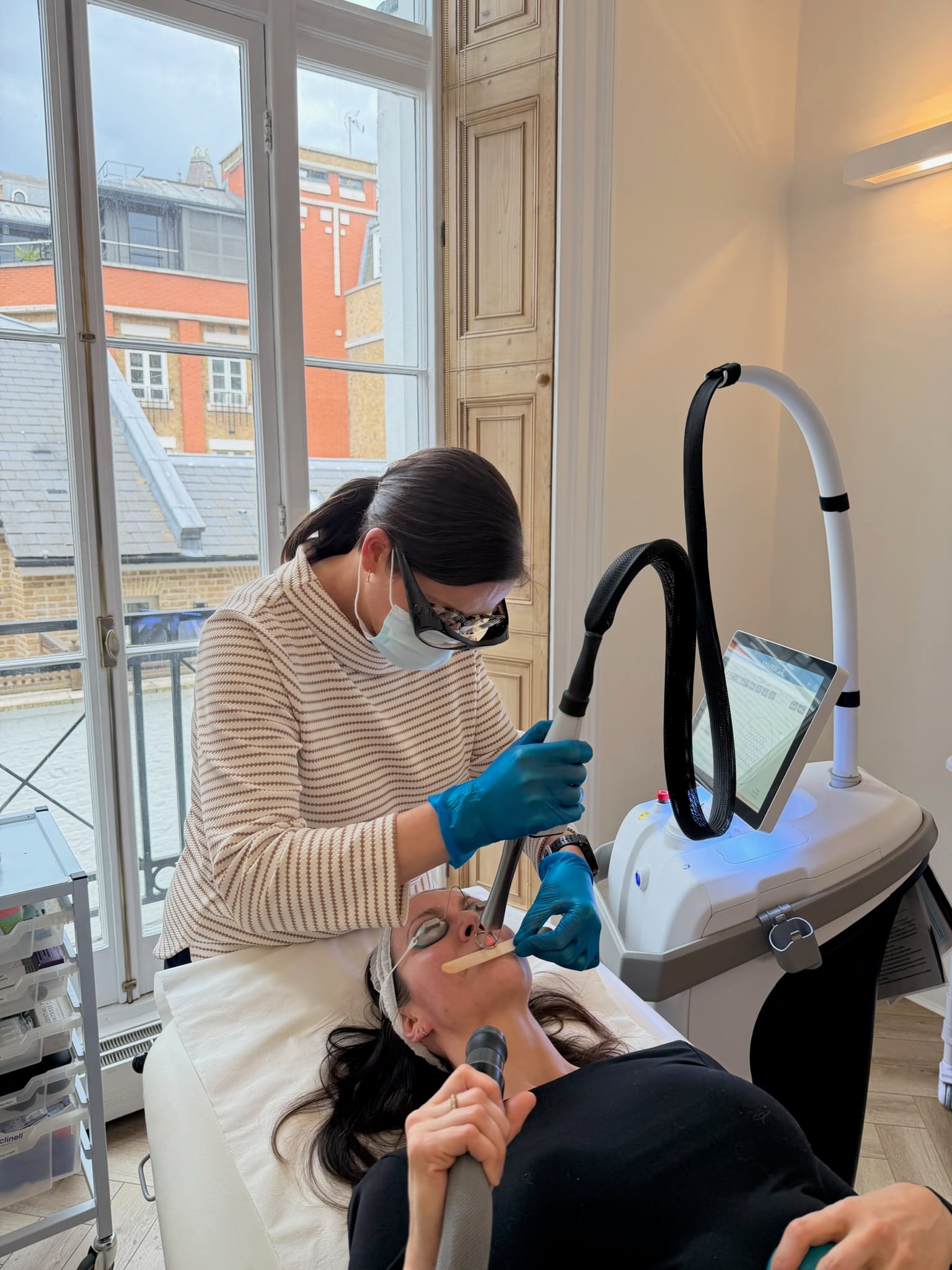
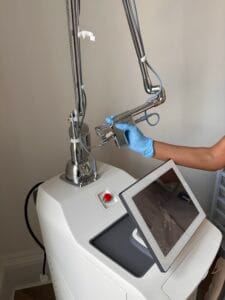
Laser skin resurfacing uses light energy to create a precisely controlled injury in the skin. Different lasers operate at different wavelengths, and those wavelengths are absorbed preferentially by particular targets, known as chromophores. In the classic ablative resurfacing lasers, the principal target is water, which is abundant throughout both the epidermis and dermis.
When laser energy is absorbed by water, tissue can be vaporised, coagulated or heated according to the wavelength and the way in which the device is used. This allows very small amounts of skin to be removed with considerable precision while also allowing the practitioner to influence the amount of residual heat left in the surrounding tissue.
The two classic ablative resurfacing wavelengths are carbon dioxide, or CO2, at 10,600 nm and erbium:YAG at 2940 nm. Both target water, but they do not interact with tissue identically. Er:YAG is absorbed extremely strongly by water and can therefore produce very precise ablation with relatively little residual thermal injury when it is used in that way, whereas CO2 produces a larger zone of thermal coagulation. Modern platforms make the distinction less binary because pulse structure and thermal effects can be manipulated, while newer resurfacing wavelengths provide further ways of creating fractional or ablative injury.
For a patient, however, the most important point is much simpler: laser resurfacing is not one standardised treatment. An ablative laser physically removes microscopic amounts of tissue, whereas a non-ablative laser creates thermal injury without removing the epidermal surface in the same way. Treatment may also be fractional, where microscopic treatment zones are surrounded by intact skin, or full-field, where the skin surface is treated much more completely.
A relatively light fractional procedure with several days of redness or roughness and a deeper full-field resurfacing treatment can therefore both be described as laser resurfacing while producing very different degrees of tissue injury, remodelling, downtime and risk. This is why asking which resurfacing laser is “best” is rarely the most useful starting point; the better question is what needs to change in the skin, at what depth, and which treatment can achieve that with an acceptable balance between benefit, recovery and risk.
What can laser resurfacing actually improve?
Resurfacing is particularly useful where the problem involves the surface or structure of the skin. In clinical practice this most commonly includes acne scarring, fine lines and more deeply etched wrinkles, rough or uneven texture, visible sun damage, some forms of enlarged-looking pores and selected types of superficial pigmentation. It can be especially useful in photodamaged skin because ultraviolet exposure rarely produces a single isolated problem, and a patient may have fine lines, irregular epidermal pigment, roughness and deterioration in dermal quality at the same time.
The word “selected” is important where pigmentation is concerned because pigmentation is a description, not a diagnosis. A solar lentigo, melasma, post-inflammatory hyperpigmentation, seborrhoeic keratosis and pigmented actinic keratosis might all be described by a patient as a brown mark, but they are not interchangeable problems. Some pigmented lesions require medical assessment rather than cosmetic laser treatment, while melasma can become worse if treatment generates inappropriate heat or inflammation.
The same principle applies to acne scarring, which forms a significant part of our laser work at Self London. Acne scars exist at different depths and have different structures: rolling scars may be tethered underneath the skin by fibrous bands, ice-pick scars are narrow and deep, and boxcar scars can be shallow or much more substantial. Most patients have more than one scar morphology, which is one reason I rarely think of “acne scarring” as one treatment problem.
One of the commonest reasons a patient can be disappointed after laser treatment is not that the machine was insufficiently powerful, but that the wrong layer of the problem was treated. A tethered rolling scar will not behave like superficial textural damage, however sophisticated the resurfacing device, and it may need subcision before resurfacing. Another patient may need focal treatment of deep scars together with broader resurfacing, while somebody with continuing inflammatory acne may need the acne brought under control before an intensive scar programme makes sense.
I see a similar problem when patients arrive asking for a “stronger” laser when the dominant issue is actually melasma, vascular redness, active inflammation or scar tethering. Treating the wrong problem more aggressively does not make the treatment more sophisticated; it simply means that the wrong structure is being treated with greater intensity.
There are also important things resurfacing cannot do. It cannot replace facial bone or fat lost with age, nor can it reposition significantly descended tissue. It is not the best treatment for every form of redness or pigmentation, and vascular laser or broadband light may be more appropriate for one component of photodamage while laxity or deeper structural ageing requires an entirely different strategy. The machine only becomes useful once the problem has been properly identified.
Why can the results last for years?
Laser resurfacing can have long-term benefits because it can remodel skin structure rather than producing only a transient change in the surface. Ageing and ultraviolet exposure gradually alter both the epidermis and the dermis: collagen becomes increasingly fragmented and disorganised, fibroblast behaviour changes, elastic tissue becomes abnormal and the epidermis becomes less regular. Chronic ultraviolet exposure adds pigmentary change and accumulated cellular DNA damage on top of this.
Ablative resurfacing creates a controlled wound within that altered tissue. In the early phase, inflammatory mediators are released and enzymes called matrix metalloproteinases increase, helping to dismantle components of the existing extracellular matrix. Fibroblasts are subsequently activated, new structural proteins are produced and the repaired matrix matures and reorganises over time.
We know this from studies that have biopsied human skin rather than simply relying on before-and-after photographs. In an important study of 28 adults with photodamaged skin treated with CO2 resurfacing, Orringer and colleagues found striking early increases in enzymes involved in matrix breakdown, followed by substantial increases in type I and type III procollagen. Procollagen production peaked at around three weeks and remained elevated for at least six months, while fibrillin and tropoelastin, both relevant to the elastic architecture of skin, increased later in the repair process.[1]
This is what “collagen stimulation” actually means in the context of meaningful resurfacing. It is not simply a case of applying heat and hoping that the skin makes more collagen. Existing damaged matrix is broken down, wound-healing signals are activated, fibroblasts produce replacement matrix and the new tissue subsequently reorganises.
Fractional resurfacing activates related pathways. Human biopsy work following non-ablative fractional treatment has shown an early increase in inflammatory cytokines, followed by matrix-remodelling enzymes and later induction of type I collagen.[2] A direct human comparison between fractionated and fully ablative CO2 resurfacing found that both initiated similar fundamental responses, although collagen induction after a single fractional treatment was approximately 40–50 per cent of that produced by full ablation.[3]
That finding is useful, but it should not be translated into the idea that deeper is automatically better. It illustrates the trade-off at the centre of resurfacing: more injury can produce a larger biological response, but it also creates a larger wound, requires more recovery and carries a higher potential for complications.
For patients, the practical consequence is that the visible healing period and the biological healing period are not the same thing. The skin may have stopped peeling while dermal remodelling is still taking place, and fine lines, texture and scar edges can continue to improve over subsequent months. This is why I am cautious about judging significant resurfacing too early or repeatedly intervening before the previous treatment has finished doing its work.
There is also some evidence that improvement can persist for years. In one study, 56 Asian patients underwent a single fractional CO2 treatment for facial photoageing; 30 returned for long-term assessment at five years and their photoageing scores remained significantly improved compared with baseline.[4] This was a small study and almost half of the original cohort did not return at five years, so it would be misleading to turn the result into a promise that an individual’s treatment will “last five years”. The more defensible conclusion is that the clinical effects of genuine resurfacing can be durable and need not disappear when the initial wound-healing response settles.
For acne scars, longevity is slightly different again because genuine structural remodelling of a scar does not simply expire after twelve months. With photoageing, further ageing and ultraviolet exposure continue, so new lines, pigment and damage can develop despite the improvement in what was originally treated. In both situations, the treatment changes the tissue that exists at that point rather than stopping everything that happens to it afterwards.
Controlled inflammation, repair and the epidermis
Inflammation has acquired an oddly universal negative meaning in popular discussions about health and skincare, but normal wound healing cannot occur without it. The important question is not whether inflammation occurs after resurfacing, but whether the injury and subsequent inflammatory response are appropriate and able to resolve normally.
When a resurfacing laser creates controlled tissue damage, the skin releases inflammatory mediators and growth signals that recruit cells involved in clearing damaged material and coordinating repair. Matrix metalloproteinases help dismantle portions of the existing extracellular matrix, fibroblasts become active, replacement collagen is produced and the epidermal barrier reforms. The initial inflammatory phase is followed by tissue formation and then a much longer period of remodelling.[1,2]
I sometimes describe this to patients as controlled biological housekeeping. It is an analogy rather than a scientific term, but it captures something important: the treatment creates the conditions in which damaged or disorganised material can be removed or remodelled and replacement tissue produced. The word controlled matters because more inflammation is not inherently more rejuvenating.
Excessive thermal injury can prolong redness, delay healing and increase the risk of post-inflammatory hyperpigmentation, hypopigmentation and scarring. In somebody prone to melasma or pigmentation after inflammation, simply increasing the intensity of treatment may make the original problem harder rather than easier to manage. This is particularly relevant in darker skin tones, where lasers can absolutely be used but where higher Fitzpatrick phototypes require greater attention to pigmentary risk, treatment selection and thermal injury. A recent review of laser complications in Fitzpatrick IV–VI skin emphasised both the increased vulnerability to some complications and the importance of greater expertise and a conservative approach.[10]
The epidermis is equally important. Discussions about rejuvenation tend to focus almost exclusively on collagen because collagen is an easy concept to market, yet ablative resurfacing also physically removes areas of epidermal tissue and allows them to repopulate. This becomes particularly interesting in chronically sun-damaged skin, where ultraviolet radiation has repeatedly damaged cellular DNA throughout life.
Much of that UV-induced damage is repaired, but over decades small populations of altered keratinocytes accumulate. Some remain invisible, while others contribute to actinic keratoses and keratinocyte cancers. Dermatologists use the term field cancerisation for an area of chronically sun-damaged skin containing a mixture of clinically visible and invisible cellular abnormalities.
A small split-face human study provides an interesting illustration of what ablation may do to this epidermal population. Ten women with photoaged facial skin underwent non-ablative 1540 nm fractional treatment on one side and fractional ablative 2940 nm Er:YAG on the other. Three months later, only the ablative side had produced a statistically significant reduction in epidermal p53 staining, a marker associated with accumulated ultraviolet damage, and the post-treatment epidermis also appeared more similar histologically to protected inner-arm skin.[5]
This was a very small study and p53 staining is a surrogate marker rather than a measurement of future cancer. It does not prove that resurfacing removes every mutated cell or somehow “resets” decades of sun-damaged skin, but it does reinforce the idea that ablative resurfacing can alter the cellular composition of the epidermis as well as improving its visible texture.
Could laser resurfacing reduce future skin-cancer risk?
There is now genuinely interesting human evidence that fractional resurfacing may reduce actinic neoplasia in a particular high-risk population, but the distinction between an emerging medical finding and a general cosmetic claim is important. The proposed mechanism involves not only removal of damaged epidermal cells but changes in the ageing dermis underneath them.
Fibroblasts help maintain the dermal extracellular matrix and communicate with the epidermis above. As skin ages, increasing numbers of fibroblasts enter cellular senescence, meaning that they remain present but their function changes. One consequence appears to be a reduction in insulin-like growth factor 1, or IGF-1, which is involved in the response of epidermal keratinocytes after ultraviolet B radiation damages their DNA.
A damaged keratinocyte should temporarily stop progressing through the cell cycle while repair takes place, and reduced IGF-1 signalling in older skin appears to make that protective response less effective. In 2012, Spandau and colleagues studied fractional resurfacing in older human skin and found that, three months after treatment, there were fewer senescent fibroblasts, increased dermal IGF-1 and a more appropriate epidermal response to experimental UVB exposure. Put simply, fewer keratinocytes were continuing to proliferate while still carrying unrepaired ultraviolet damage.[6]
The subsequent clinical research is even more interesting. In a prospective randomised trial published in the Journal of Clinical Investigation in 2021, 48 people aged 60 or over with substantial actinic damage had one lower arm treated once with fractional ablative resurfacing while the opposite arm remained untreated. The treated skin developed persistently fewer actinic keratoses, and during the reported follow-up there were two non-melanoma skin cancers on treated arms compared with 24 on untreated arms.[7]
That cohort has now been followed for more than five years. The extended report, published in the Journal of the American Academy of Dermatology in 2026, found that the reduction in actinic keratoses persisted through 66 months and that the reduction in non-melanoma skin cancers also continued over long-term follow-up.[8]
These findings are striking, but their limitations are equally important. The long-term cohort consisted almost entirely of men over 60 with Fitzpatrick I–II skin and substantial pre-existing actinic damage, each with multiple actinic keratoses. We cannot assume that a 40-year-old having facial resurfacing for texture or acne scarring obtains the same cancer-related effect, nor can we assume that every resurfacing wavelength or protocol produces it.
I would therefore not advise routine cosmetic laser resurfacing as a general strategy for preventing skin cancer. Sunscreen, sensible ultraviolet exposure, surveillance and established medical treatments for actinic keratoses and skin cancer remain essential. What the research does show is that controlled resurfacing can have long-term biological effects in severely photodamaged older skin, and that those effects may involve not only removal of abnormal epidermal tissue but changes in the dermal environment in which the new epidermis subsequently functions.
To me, this makes the boundary between cosmetic rejuvenation and skin health rather more interesting than it is often presented. Some of the structural and cellular changes that make chronically photodamaged skin look older are occurring within the same tissue that has accumulated decades of ultraviolet injury, and resurfacing may influence both.
Why depth, recovery and the person treating you matter
The same sophisticated resurfacing laser can produce an excellent, mediocre or harmful result depending on diagnosis, treatment planning and technique. A deeper or more confluent procedure can create a greater tissue response, but it also creates a larger wound. Real-world data from full-field Er:YAG resurfacing demonstrate this clearly: in an eight-year retrospective series, complication rates increased as treatment became deeper, with substantially more complications after deep resurfacing than after superficial MicroLaserPeel procedures.[9]
The appropriate treatment is therefore not the most aggressive procedure a patient can tolerate. It is the amount of injury required to address the problem with an acceptable balance between expected benefit and risk. A patient with deeply etched perioral lines may reasonably need a substantially stronger procedure than somebody with early superficial photodamage, while a patient with acne scarring may need different depths in different areas. Someone with a strong tendency to post-inflammatory pigmentation may require a much more conservative approach, regardless of what the machine is capable of delivering.
I will sometimes treat different areas of the same face differently because the upper lip, eyelids, cheeks and neck do not have identical anatomy, pathology or healing behaviour. The machine cannot make those decisions, nor can it determine whether the brown patch in front of it is a solar lentigo, melasma, post-inflammatory pigmentation, pigmented actinic keratosis or a melanocytic lesion that should not be treated cosmetically. It cannot identify tethering underneath a rolling acne scar or decide that vascular treatment would be more useful than resurfacing.
Even after the diagnosis is correct, there is no single setting called “laser resurfacing”. Depth of ablation, density, pulse duration, energy, number of passes, overlap and residual thermal coagulation all influence the injury that is created. The anatomical area matters, skin type matters and previous procedures matter, while the practitioner needs to understand how laser energy interacts with tissue and recognise when an appropriate clinical endpoint has been reached.
Expertise matters after treatment too because redness, swelling and crusting may be part of completely normal recovery, whereas infection, contact dermatitis, delayed re-epithelialisation, pigmentary change and the beginnings of abnormal scarring require recognition and management. A 2025 international consensus statement on fully ablative facial resurfacing places careful patient selection, counselling, peri-procedural management, wound care and early recognition of complications alongside the technical delivery of the laser itself.[11]
I have worked clinically with lasers and energy-based devices for more than a decade, including previous key-opinion-leader (KOL) work with laser companies, and this has given me the opportunity to work closely with multiple technologies and to see how differently apparently similar devices can behave in real skin. What matters to me is breadth rather than allegiance to one machine, because no single platform is the best answer to every clinical problem.
Being early to a technology can be valuable, but being first to buy something is not the same as being best placed to decide who should receive it. The real advantage of experience across different platforms is having enough choice and understanding to decide that a particular machine is not the right treatment for the patient in front of you.
How we approach laser resurfacing at Self London
Self London is a consultant-led dermatology and laser clinic on Harley Street, London, and our approach to resurfacing starts with the skin concern rather than the device. For somebody with acne scarring, I want to understand the scar morphology, whether tethering is present, whether active acne has been controlled and which components genuinely require resurfacing. With pigmentation, I want a diagnosis before deciding whether a laser should be used, while in sun-damaged skin I separate epidermal pigment, vascular change, surface texture, lines and deeper structural ageing rather than assuming that a single wavelength should correct all of them.
Only after that assessment do we decide what technology makes sense. Sometimes the answer is fractional resurfacing, while in another patient a more substantial ablative procedure may be appropriate. A vascular or pigment-targeting treatment may need to come first, or a scar may require subcision or another focal technique before laser treatment becomes useful. Occasionally I advise that resurfacing is unlikely to offer enough benefit to justify the recovery or risk.
Having access to several laser and light platforms preserves that choice because the treatment plan can follow the diagnosis rather than being reverse-engineered around the machine a clinic happens to own. This matters to me clinically because expertise is not simply the ability to perform a particular treatment; it is also knowing when a different treatment, a different sequence or no treatment at all is the more sensible choice.
We also do not perform laser treatment on the day of the initial consultation and we do not sell predetermined treatment packages. I do not know before treating somebody exactly how their skin will respond or how much additional treatment will ultimately be useful, so a consultation is an assessment rather than an obligation to proceed. The patient should understand what is being proposed, why it has been chosen, what recovery is likely to involve, what improvement is realistic and what the potential complications are before deciding to go ahead.
There is similarly no universal maintenance schedule after resurfacing. Somebody who has undergone meaningful treatment does not automatically need another procedure every six or twelve months, and if the skin still looks good and there is nothing significant to treat, I see little value in creating another wound simply because a certain amount of time has passed. Long-term care is often less dramatic: sensible sun protection, appropriate skincare, prescription treatments where indicated, and further procedures when there is a clear reason for them.
What should you look for when choosing where to have laser resurfacing?
I would look beyond the name of the machine because the device alone does not tell you who has assessed your skin, who will perform the treatment, how the proposed depth and density were chosen or what happens if healing does not follow the expected course. It is entirely reasonable to ask which technology is being recommended, but I would also want to understand why that particular technology is appropriate for the problem being treated.
For acne scarring, I would want somebody to understand scar architecture rather than simply possess a device marketed for scars. With pigmentation, I would want the pigmentation diagnosed, and with deeper resurfacing I would want to know what postoperative support is available and who will recognise and manage a complication if one develops. Before-and-after photographs are useful, but they should sit alongside an explanation of why a particular treatment was chosen and whether the same approach is actually appropriate for your skin.
A good consultation should therefore leave you understanding not just which machine will be used, but what is being treated, at what depth, why that particular approach makes sense and what its limitations are. The most useful question is not simply “Which laser do you have?”, but “Why is this the right treatment for my skin?”
So, what are the long-term benefits of laser skin resurfacing?
For the right patient, the long-term benefits of laser resurfacing come from genuine structural change. Ablative treatment can remove damaged epidermal tissue and allow the surface to repopulate, while controlled injury activates an organised wound-healing response in which damaged extracellular matrix is broken down and remodelled, fibroblasts produce new collagen and the dermis continues to change for months after the visible recovery has finished.
Clinically, this can produce durable improvement in acne scars, fine lines, etched wrinkles, rough texture and photodamage. The precise longevity differs because scar remodelling, pigmentation and continuing skin ageing do not behave in the same way, but meaningful resurfacing is fundamentally different from a temporary surface treatment.
The newer research in severely sun-damaged older skin adds another dimension. Fractional resurfacing has been shown to reduce senescent fibroblasts, restore aspects of IGF-1 signalling and improve the response of epidermal cells to subsequent ultraviolet injury, while a randomised human trial and its long-term follow-up have demonstrated sustained reductions in actinic keratoses and fewer keratinocyte cancers in treated skin. These findings are important, but they apply to a particular high-risk population and should not be inflated into a claim that routine cosmetic resurfacing prevents skin cancer.
The broader point is that laser resurfacing is a biological intervention rather than simply a machine treatment. The wavelength matters, the depth matters and the technology matters, but diagnosis, anatomy, skin type, treatment sequencing, wound healing and operator judgement determine how those tools should be used. The best resurfacing treatment is therefore not necessarily the newest or the strongest; it is the one that creates the right amount of change, at the right depth, in the right skin.
References
- Orringer JS, Kang S, Johnson TM, Karimipour DJ, Hamilton T, Hammerberg C, Voorhees JJ, Fisher GJ. Connective tissue remodeling induced by carbon dioxide laser resurfacing of photodamaged human skin. Arch Dermatol. 2004;140(11):1326–1332. doi:10.1001/archderm.140.11.1326.
- Orringer JS, Rittié L, Baker D, Voorhees JJ, Fisher GJ. Molecular mechanisms of nonablative fractionated laser resurfacing. Br J Dermatol. 2010;163(4):757–768. doi:10.1111/j.1365-2133.2010.09998.x.
- Orringer JS, Sachs DL, Shao Y, Hammerberg C, Cui Y, Voorhees JJ, Fisher GJ. Direct quantitative comparison of molecular responses in photodamaged human skin to fractionated and fully ablative carbon dioxide laser resurfacing. Dermatol Surg. 2012;38(10):1668–1677. doi:10.1111/j.1524-4725.2012.02518.x.
- Tan J, Lei Y, Ouyang HW, Gold MH. The use of the fractional CO2 laser resurfacing in the treatment of photoaging in Asians: five years long-term results. Lasers Surg Med. 2014;46(10):750–756. doi:10.1002/lsm.22304.
- Borges J, Araújo L, de Oliveira RPB, Manela-Azulay M. Effects of 1,540-nm fractional nonablative erbium and 2,940-nm fractional ablative erbium on p53 epidermal expression after 3 months: a split-face interventional study. Dermatol Surg. 2018;44(8):1109–1114. doi:10.1097/DSS.0000000000001527.
- Spandau DF, Lewis DA, Somani AK, Travers JB. Fractionated laser resurfacing corrects the inappropriate UVB response in geriatric skin. J Invest Dermatol. 2012;132(6):1591–1596. doi:10.1038/jid.2012.29.
- Spandau DF, Chen R, Wargo JJ, et al. Randomized controlled trial of fractionated laser resurfacing on aged skin as prophylaxis against actinic neoplasia. J Clin Invest. 2021;131(19):e150972. doi:10.1172/JCI150972.
- Spandau DF, Torralba E, Howard C, et al. Five-year follow-up on randomized controlled trial of fractionated laser resurfacing as prophylaxis against actinic neoplasia. J Am Acad Dermatol. 2026;94(1):273–275. doi:10.1016/j.jaad.2025.08.114.
- Weniger FG, Weidman AA, Barrero Castedo CE. Full-field Erbium:YAG laser resurfacing: complications and suggested safety parameters. Aesthet Surg J. 2020;40(6):NP374–NP385. doi:10.1093/asj/sjz319.
- Soares I, Pereira Amaral I, Pupo Correia M, Travassos R, Filipe P. Complications of dermatologic lasers in high Fitzpatrick phototypes and management: an updated narrative review. Lasers Med Sci. 2024;39(1):149. doi:10.1007/s10103-024-04100-4.
- Kang BY, Cohen JL, Geronemus R, et al. Consensus statement on the prevention and management of complications of fully ablative laser resurfacing of the face. Lasers Surg Med. 2025;57(6):477–489. doi:10.1002/lsm.70035.