How collagen remodelling, energy delivery and clinical strategy determine outcomes in acne scar treatment
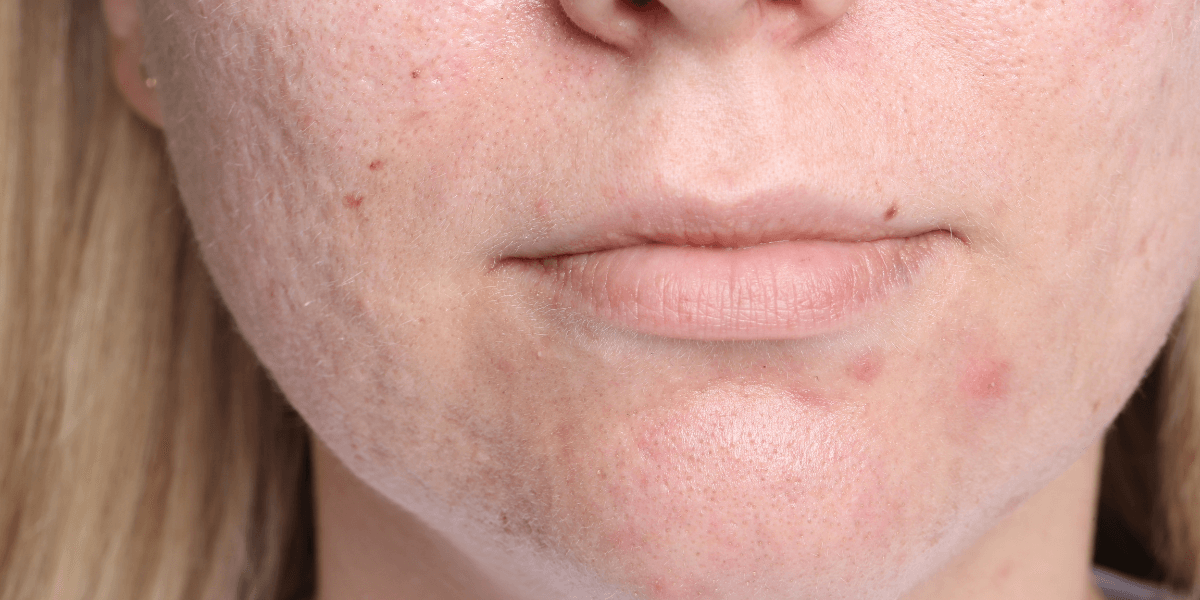
Acne scarring is often spoken about as though it were a single problem with a single solution. In reality, it represents one of the most complex challenges in aesthetic dermatology. Scars differ in depth, morphology, surrounding skin quality and biological behaviour. Even within one face, boxcar scars, rolling scars and areas of textural irregularity frequently coexist alongside enlarged pores, post-inflammatory pigmentation and early lines. This complexity explains why many patients feel confused by contradictory advice, particularly when deciding between microneedling and laser treatment.
Understanding scar biology
Microneedling has become widely available over the past decade and has an understandable appeal. It is relatively accessible, minimally invasive and associated with short downtime. The principle is straightforward: fine needles create controlled mechanical injury in the skin, stimulating wound healing pathways and collagen production. For mild textural irregularity or early superficial scarring, this can produce improvement, and in the right hands it has a role within a broader treatment strategy.
However, when discussing acne scars properly, it is important to move beyond simplified comparisons and examine how these technologies actually interact with skin biology. Acne scars are not simply a lack of collagen. They are areas of altered dermal architecture where injury has healed imperfectly, leaving structural distortion beneath the surface. Effective treatment therefore depends not only on stimulating collagen but on controlling how injury is delivered, where it is delivered, and how the tissue responds during the healing process. This is where fundamental differences between microneedling and laser technology begin to matter.
Mechanisms of microneedling vs laser
Mechanical injury, as created by microneedling, relies primarily on the physical penetration of needles into the dermis. Depth can be adjusted to a degree, often up to approximately 1 mm in many devices used outside specialist medical settings, but the nature of the injury remains uniform. The same mechanical channel is created across treated skin regardless of scar morphology or variation in tissue density. Importantly, there is no meaningful control over thermal energy, coagulation or tissue contraction. Collagen stimulation occurs largely through a broad wound-healing response rather than precise modulation of dermal architecture.
Laser technology operates differently. Rather than creating purely mechanical channels, laser energy allows controlled delivery of thermal injury to the skin. Depth, density, energy and surface area can be modulated with high precision. This matters because heat is not merely destructive; it is biologically instructive. Controlled thermal zones trigger collagen remodelling, stimulate fibroblast activity and induce structural reorganisation within the dermis in ways that mechanical injury alone does not replicate. The ability to control this injury at a microscopic level is one of the primary reasons fractional laser resurfacing has become central to modern acne scar treatment.
Clinical implications and treatment strategy
In clinical practice, it is not uncommon for us to see patients who have undergone multiple sessions of microneedling, sometimes six, eight or even twelve treatments, yet remain disappointed by the degree of structural change achieved. This does not necessarily mean the treatment has failed entirely. Rather, it reflects the biological limits of mechanical stimulation once collagen induction reaches a plateau. At this stage, further improvement often requires more precise energy delivery and controlled dermal remodelling, which is where laser-based approaches tend to create a clearer step change in outcomes.
In specialist practice, this moment often marks a transition from procedural treatment to true scar reconstruction, where success depends less on repeating stimulation and more on accurately reshaping dermal architecture.
From a clinical perspective, the most significant advantage of laser treatment is customisation. Acne scars rarely sit at a single depth. Some areas require deeper dermal remodelling, while others need lighter resurfacing to preserve barrier function or reduce risk of pigmentary complications. During a laser session, parameters can be adjusted dynamically. Deeper scars may be treated more aggressively, while adjacent skin receives more superficial energy. Density can be varied, energy levels altered, and treatment patterns adapted in real time based on tissue response. This level of control is not theoretical; it is central to producing coherent, natural-looking improvement rather than patchy or inconsistent outcomes.
Precision does not equate to aggression. In experienced hands, the ability to control depth, energy density and treatment pattern often allows laser intervention to be more selective rather than more traumatic, targeting scar architecture while minimising unnecessary injury to surrounding tissue. This distinction is central to why advanced laser treatments frequently achieve greater structural improvement despite being perceived by patients as more intensive.
This flexibility becomes particularly important when treating patients whose concerns extend beyond acne scars themselves.
The multimodal approaches and long-term outcomes
In real-world practice, most scar patients also have accompanying issues: enlarged pores, uneven texture, residual redness, pigment irregularity or early signs of photoageing. Laser platforms allow these concerns to be addressed within the same treatment strategy. By adjusting settings or combining modalities, one treatment session can influence scar depth, surface refinement and overall skin quality simultaneously. Microneedling, by contrast, tends to deliver a more uniform injury profile, making it harder to address multiple layers of concern with the same precision.
The distinction is not merely technical; it reflects fundamentally different treatment philosophies. Microneedling is often protocol driven. Laser treatment, at its highest level, is diagnostic and adaptive. It requires understanding scar morphology, skin thickness, phototype, barrier integrity and healing behaviour. The success of treatment depends less on the machine itself and more on the clinician’s ability to interpret the biology in front of them.
This difference partly explains why outcomes vary so widely across clinics. Laser technology is expensive and requires significant training in physics, tissue interaction and safety. Energy delivery must be understood in terms of wavelength, pulse duration, thermal diffusion and healing dynamics.
Microneedling devices, by comparison, are relatively inexpensive and widely available, which has contributed to their popularity but also means they are commonly delivered outside specialist dermatology settings. Accessibility is not inherently negative, but it changes the level of expertise typically involved in treatment planning.
When evaluating results from published studies, both approaches can demonstrate improvement in acne scarring. However, comparative studies consistently show that fractional laser resurfacing produces greater improvement in moderate to severe acne scars than microneedling alone, largely because laser energy can induce deeper dermal remodelling, tissue contraction and more controlled collagen reorganisation. The scientific explanation aligns with clinical experience: thermal injury creates a stronger and more controllable regenerative signal than mechanical puncture alone. The ability to vary depth and energy also allows treatment to be tailored to scar subtype rather than applied uniformly.
None of this suggests that microneedling has no place. In carefully selected patients with superficial scarring, or as part of maintenance strategies, it may contribute to ongoing collagen support. It can also sit within a multimodality pathway. However, for patients seeking meaningful structural improvement, particularly those with deeper scars or complex skin concerns, laser technology often provides outcomes that are both more predictable and more transformative when delivered by experienced clinicians.
An increasingly important evolution in scar treatment is the movement toward multimodal therapy. Collagen remodelling does not occur in isolation, and combining technologies or regenerative approaches can enhance outcomes. Laser treatments may be paired with injectable biostimulators such as polynucleotides, supporting tissue repair and improving skin quality during the healing phase. In this context, laser acts as a controlled trigger for remodelling, while adjunctive therapies optimise the regenerative environment. The goal is not aggressive intervention for its own sake, but intelligent layering that respects skin biology.
Acne scar treatment rarely succeeds through repetition of a single modality. The most significant improvements are usually achieved when treatment evolves as the skin changes, adjusting parameters, depth and strategy at each stage of remodelling. Laser technology allows this level of adaptability within a single session, varying depth in response to scar morphology and combining structural correction with broader skin optimisation. This flexibility also matters because many acne scar patients present with additional concerns such as enlarged pores, pigment irregularity, early perioral lines or textural change. A multimodal approach allows these issues to be addressed simultaneously rather than treated in isolation.
Another reason laser remains central to advanced scar management is its ability to balance resurfacing and preservation. Over-treatment can destabilise the barrier, provoke inflammation or worsen pigmentation, particularly in darker skin phototypes. Under-treatment fails to stimulate meaningful change. Precision energy delivery allows clinicians to navigate this balance with far greater control than purely mechanical approaches. Treatment becomes a process of incremental structural refinement rather than indiscriminate stimulation.
Patients often ask why some acne scar treatments produce impressive early results that later plateau. Frequently, the answer lies in the biology of remodelling. True dermal change requires adequate stimulus and sufficient healing time. Laser treatments, when properly sequenced, create stronger signals for collagen reorganisation, allowing progressive improvement over months. This long-term trajectory is crucial to communicate clearly, as real scar improvement is rarely immediate and depends heavily on strategic planning rather than isolated interventions.
The role of expertise and skin biology
Ultimately, the conversation around microneedling versus laser should not be framed as a competition between devices. The more useful question is what level of control and clinical strategy is required to achieve meaningful change in scarred skin. Acne scars represent structural change beneath the surface, and treating them successfully demands precision, adaptability and a deep understanding of how skin heals.
For many patients, the turning point in acne scar treatment occurs when therapy moves beyond repeated stimulation towards precise, biologically targeted remodelling. This transition often explains why individuals who felt they had reached a ceiling with microneedling begin to see more meaningful change once the treatment strategy becomes highly customised and energy based.
The strongest outcomes are rarely produced by technology alone. They emerge from the combination of dermatologic knowledge, laser expertise and the ability to interpret skin as a biological system rather than a cosmetic problem. The clinician must decide where deeper remodelling is needed, where restraint is safer, and how to combine modalities to support both improvement and stability over time.
What often distinguishes expert scar management from routine treatment is not simply access to technology but the ability to think surgically about skin architecture while working non-surgically. Acne scars represent structural defects in the dermis, and meaningful improvement depends on understanding where tissue must be remodelled, where it should be preserved, and how energy can be layered progressively without destabilising barrier function or provoking inflammation. This level of decision-making sits at the intersection of medical dermatology, laser physics and aesthetic judgement, and is one of the reasons outcomes vary so dramatically between providers even when similar devices are used.
At Self London, this philosophy underpins every acne scar treatment plan. Laser technologies are used not as isolated tools but as part of a medically led, biologically informed strategy that combines consultant dermatology expertise, advanced laser knowledge and a deep understanding of skin biology across diverse skin types. Treatment plans are designed around scar morphology, healing behaviour and long-term skin health rather than fixed protocols. The aim is not simply to create short-term visible change, but to guide the skin toward a more organised and resilient structure over time. When this approach is applied correctly, results appear more natural, more coherent and more durable, reflecting not just treatment, but thoughtful clinical interpretation of the individual skin in front of us.
In practice, this integrated way of thinking sits closer to the model seen in leading cosmetic dermatology centres internationally, where medical dermatology, laser science and aesthetic strategy operate together rather than as separate disciplines.