A consultant dermatologist’s in-depth guide to understanding seasonal triggers and restoring calm to reactive skin
Winter is often the season that brings rosacea into sharp focus. Skin that seemed reasonably stable in the warmer months can feel increasingly unpredictable as temperatures drop. A brief walk outside can leave the face burning, indoor heating triggers a rush of warmth that appears without warning, and skincare that felt comfortable in summer begins to sting. Many patients recognise winter as the moment their skin becomes noticeably more reactive, even though the underlying biology has been present for far longer. Winter does not create rosacea but it does expose the vulnerabilities within the condition with greater intensity.
Rosacea is a chronic inflammatory disorder involving the immune system, the skin barrier, the sensory nerves and the superficial blood vessels. These systems are finely balanced, and in rosacea that balance is easily disrupted. Winter places simultaneous stress on each of these systems. Cold air, low humidity, wind exposure, rapid temperature transitions, indoor heating and residual ultraviolet light all interact with skin that is already sensitive. Once these mechanisms are understood, winter flare-ups become far less mysterious and significantly easier to manage
This article explores the underlying biology, the winter specific triggers and the practical and clinical strategies that genuinely help rosacea prone skin remain stable through the colder months.
What does winter do to rosacea prone skin?
Rosacea is characterised by heightened vascular reactivity, altered innate immunity, disrupted barrier function and increased neurosensory sensitivity. These pathways are present throughout the year but winter intensifies them. Research has shown that rosacea skin produces higher levels of inflammatory peptides, particularly the cathelicidin LL 37 family, together with increased activity of enzymes such as kallikrein 5. These molecules amplify inflammation and sensitise the blood vessels, making the skin more reactive to external triggers.
Cold air causes the small facial vessels to constrict. When you step indoors into warm air, these same vessels dilate quickly. In rosacea, this dilation is exaggerated because temperature sensitive nerve receptors, including TRPV1 and TRPV3, overrespond to changes in temperature. Studies in the Journal of Investigative Dermatology have shown that these receptors are more active in rosacea and react intensely to heat, cold and mechanical wind exposure. This explains the rapid flushing that many people experience the moment they enter a warm room after being outdoors.
Winter air also contains less moisture, which increases transepidermal water loss. When the lipid barrier becomes disrupted, the skin struggles to retain hydration and becomes more vulnerable to irritants. Barrier instability exposes nerve endings, which contribute to the burning and stinging sensations that are so common in rosacea during winter. A compromised barrier can also alter the skin microbiome. Demodex mites, which live naturally on human skin, can proliferate in greater density when the barrier is impaired. Research published in the British Journal of Dermatology has linked increased Demodex density with rosacea flares and inflammatory symptoms.
These mechanisms work cumulatively. Low humidity dries the skin, cold air constricts vessels, indoor heating causes rebound dilation and winter sunlight continues to deliver UVA radiation that aggravates redness. Rosacea prone skin has a reduced margin for error, and winter pushes that margin further than other seasons.
Sensitive skin or rosacea: recognising the difference
A significant number of adults describe their skin as sensitive. Sensitive skin is characterised by stinging, burning, tightness, discomfort and intermittent redness, but it is a descriptive term rather than a diagnosis. Rosacea is different. It is a defined inflammatory condition with recognisable patterns and specific management pathways.
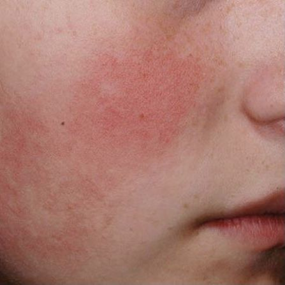
Winter often makes the distinction clearer. Weather related irritation improves quickly once the environment changes or once the barrier is restored. Rosacea behaves differently. The redness becomes more persistent, the flushing becomes more frequent, and the central face feels warm even in neutral conditions. Some patients notice visible thread veins. Others see acne like bumps that do not behave like typical acne. These patterns are consistent with rosacea and are more apparent when the skin is challenged by winter conditions.
Rosacea also presents in several subtypes. Erythematotelangiectatic rosacea involves persistent redness and visible vessels. Papulopustular rosacea presents with spots and sensitivity. Ocular symptoms can appear in some cases, causing eye dryness or grittiness. Winter does not change the subtype but makes its features more noticeable.
If redness or flushing persists for more than two weeks, or if winter aggravates symptoms to a degree that feels disproportionate, a dermatological assessment is recommended. Correct diagnosis allows treatment to be tailored to the underlying mechanisms rather than relying on temporary surface soothing.
Why skincare that felt comfortable in summer becomes intolerable in winter
A common observation from patients is that products which felt gentle in summer suddenly cause stinging or redness in winter. This change does not reflect a sudden sensitivity to ingredients but a shift in the skin’s barrier function. Cold, dry air and centrally heated indoor environments reduce moisture levels within the epidermis. When the barrier lipids are disrupted, ingredients such as exfoliating acids, strong retinoids, botanical extracts, menthols, essential oils and certain alcohols penetrate more deeply and become more irritating.
Even well formulated products can cause discomfort when the barrier is fragile. Winter reduces the skin’s tolerance to active ingredients, and it is common for exfoliation that was appropriate in summer to become excessive in colder months. Cleansers that foam or contain strong surfactants may strip the skin, making it more reactive.
A winter skincare routine for rosacea should prioritise stability, simplicity and protection. Cream or balm cleansers tend to be better tolerated. Moisturisers that focus on barrier repair rather than complex active blends restore comfort more effectively. Mineral sunscreens containing titanium dioxide or zinc oxide provide reliable protection without relying on chemical filters that sometimes irritate. Predictability is important because the skin responds best when the routine is calm and consistent.
Many people attempt to counteract dryness by adding multiple new products but this often overwhelms the skin further. The goal in winter is not expansion but consolidation.
Why do winter flare ups appear so quickly?
One of the defining features of winter rosacea is the immediacy of flushing. Many people describe walking into a warm room and feeling their cheeks heat within seconds. This reaction is physiological. In rosacea, the vessels dilate more readily and the neurosensory receptors react more strongly to temperature change. When cold constricted vessels are suddenly exposed to warmth, the rebound dilation is pronounced. The face fills with heat and the redness becomes visible before the body has had time to adjust.
Wind can also provoke flare ups. Mechanical friction from wind irritates the surface, and the cold temperature primes the vessels for rebound dilation indoors. These patterns can occur repeatedly throughout the day, creating a sense that the skin is oscillating between extremes. Understanding that this is a predictable vascular response can help patients interpret what is happening rather than feeling overwhelmed by the suddenness of the symptoms.
Winter specific influences: heating, humidity, diet and stress
Central heating is one of the most overlooked winter triggers. Heated indoor air is low in humidity and accelerates moisture loss from the skin. This worsens barrier dysfunction and increases sensitivity. Lowering the temperature slightly or using a humidifier can meaningfully reduce symptoms. Hot showers can also provoke flushing. Warm water is better tolerated because it avoids the sudden heat exposure that activates the neurosensory pathways involved in rosacea.
Dietary triggers vary substantially between individuals but certain patterns are recognised. Red wine, aged cheeses and spicy foods can induce vasodilation through neurovascular pathways. In winter, when the skin is already reactive, these triggers often have a more pronounced impact. Moderation rather than exclusion is usually the most practical approach unless a specific pattern is identified.
Stress is another factor that can influence rosacea. Winter often brings increased psychological load, and stress activates the same neurovascular pathways that drive flushing. While emotional wellbeing is important in long term rosacea management, the priority in winter is often stabilising the physical triggers first. As the skin becomes calmer, the feedback loop between stress and redness usually improves naturally.
How to differentiate rosacea from winter irritation
Winter weather can irritate even people who do not have rosacea. Cold weather dermatitis, chapped skin and wind related irritation can mimic rosacea but behave differently. Weather related irritation resolves quickly with barrier support and does not show the same pattern of flushing, persistent central redness or sensitivity to heat.
Other conditions that resemble rosacea include seborrhoeic dermatitis, which often presents around the nose, eyebrows and hairline with flaking, and periorificial dermatitis, which causes bumps around the mouth or eyes. Acne, lupus and contact dermatitis can also present with facial redness that requires differentiation. A dermatologist evaluates the distribution, symptom pattern and triggers to distinguish these conditions.
Accurate diagnosis ensures that treatment addresses the correct biological pathway rather than relying on generalised soothing, which will not correct persistent vascular or immune mediated inflammation.
When home care is no longer enough
Winter is often the moment patients seek medical treatment because the skin reaches a threshold beyond which simple adjustments no longer offset flare ups. If redness becomes persistent, if bumps or pustules appear, or if flushing becomes intrusive, prescription treatment is appropriate.
Topical treatments such as azelaic acid, metronidazole and ivermectin target inflammation and, in the case of ivermectin, Demodex related pathways. Brimonidine and oxymetazoline can reduce persistent redness in selected cases. Oral medications such as low dose doxycycline calm inflammatory pathways and are often helpful in managing more significant flares.
Treatment plans vary depending on whether redness, flushing or inflammatory lesions are predominant. Winter can be an ideal time to begin treatment because triggers are clear and the skin responds well to structured intervention when the environment is consistent.
The role of laser and light-based treatments in winter
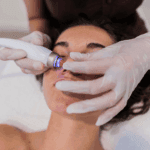
Vascular laser and broadband light treatments play an important role in managing rosacea, especially for persistent redness, visible thread veins and chronic vascular instability. Winter is an advantageous season for these treatments because UV exposure is lower and sun protection is easier to manage.
Treatments such as broadband light and non-ablative laser technologies use selective wavelengths to reduce dilated vessels, calm chronic redness and improve vascular stability. The principle behind these treatments is selective photothermolysis. Light energy is absorbed by haemoglobin within the vessels, generating controlled heat that reduces their visibility. Over a series of treatments, the baseline redness diminishes and the skin becomes less reactive to environmental triggers.
Laser is not a permanent cure for rosacea but it is one of the most effective ways to reduce the vascular component that underpins many winter flare ups. The key is selecting the correct parameters and performing treatment in a clinical environment familiar with the sensitivity of rosacea. When used appropriately, laser provides long lasting improvements in redness and flushing, often making winter significantly more tolerable.
Why winter sunlight remains relevant
People often assume that winter sunlight is insignificant because temperatures are low. This is incorrect. UVA radiation penetrates clouds and glass and is present throughout the year. More than eighty per cent of people with rosacea report that UV exposure triggers their redness. Daily mineral sunscreen remains essential because the key issue is wavelength, not warmth.
When to seek dermatological advice
If winter consistently triggers flare ups, if redness becomes increasingly fixed or if the skin feels unpredictable despite careful routines, it is time to seek professional assessment. Rosacea is highly treatable with the correct combination of skincare, lifestyle adjustments, prescription therapies and, when appropriate, laser. The aim is to establish long term stability, not temporary suppression. Winter is a particularly useful time to begin treatment because the patterns are pronounced and improvements can become noticeable by spring.
Final thoughts
Winter amplifies every vulnerability in rosacea. The barrier becomes fragile, the vessels overreact to temperature changes, the nerves fire too readily and the immune system becomes more inflammatory. Yet the condition is far from unmanageable. With a calm and protective skincare approach, measured lifestyle decisions, appropriate medical treatment and well-timed vascular laser, rosacea can remain stable throughout winter. Understanding the underlying biology helps patients navigate the colder months with greater confidence and far fewer flare ups. The aim is to restore predictability to the skin and to support its resilience through a season that would otherwise expose its sensitivities.
References
- Yamasaki K, Di Nardo A, Bardan A, Murakami M, Ohtake T, Coda A, et al. Increased serine protease activity and cathelicidin promotes skin inflammation in rosacea. Nat Med. 2007;13(8):975–80.
- Sulk M, Seeliger S, Wolf R, Schwab VD, Hevezi P, Sátori A, et al. Distribution and expression of transient receptor potential vanilloid channels in rosacea. J Invest Dermatol. 2012;132(4):1253–62.
- Forton F, De Maertelaer V. Papulopustular rosacea and rosacea like demodicosis: two clinical presentations associated with an increased Demodex density. Br J Dermatol. 2012;166(4):829–36.
- Goad N, Lawrence C. Moisturizing the skin: influence of low humidity on the barrier function. J Dermatol Sci. 2016;84(1):68–74.
- Two AM, Wu W, Gallo RL, Hata TR. Rosacea: Part I. Introduction, categorization, histology, pathophysiology, and risk factors. J Am Acad Dermatol. 2015;72(5):749–58.
- Steinhoff M, Buddenkotte J, Aubert J, Sulk M, Novak P, Schwab VD, et al. Clinical, cellular, and molecular aspects in the pathophysiology of rosacea. J Invest Dermatol. 2011;131(8):1620–7.
- Cribier B. Pathophysiology of rosacea: redness, flushing, and burning. Ann Dermatol Venereol. 2011;138 Suppl 3:S184–91.