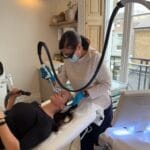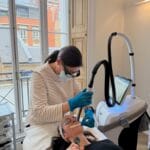

The term “laser facial” has become so widely used that it now describes treatments that differ profoundly in their purpose, technology and clinical value. In many settings it is not a medical term at all, but a piece of shorthand used to make light-based treatments sound familiar or accessible. The difficulty arises when that language obscures what is actually being done to the skin, and therefore what outcomes a patient should reasonably expect.
A medical-grade laser facial is not a modernised version of a traditional facial, nor is it simply a cosmetic experience involving a device. When delivered properly, it is a clinically rational intervention that uses laser or light-based energy to interact with specific biological targets within the skin. It may be used to address early signs of photo-ageing, to stabilise pigment and vascular behaviour, or increasingly, to preserve skin quality before visible deterioration appears.
Whether a medical-grade laser facial is worth the investment depends on understanding how these treatments work, why results vary so widely between clinics, and how clinical judgement and governance shape outcomes just as much as technology.
Skin ageing and skin quality are biological processes, not surface problems
Skin does not suddenly age when lines appear or pigmentation becomes obvious. Ageing is a cumulative biological process driven by ultraviolet exposure, oxidative stress, chronic low-grade inflammation, hormonal influences and progressive disorganisation of the dermal matrix. Long before these changes become visible, molecular and structural alterations are already underway.
Ultraviolet radiation induces DNA damage and alters melanocyte signalling. Chronic inflammation disrupts vascular stability and collagen organisation. Fibroblasts gradually lose efficiency, elastin becomes fragmented, and the extracellular matrix stiffens. These processes begin early and progress quietly.
Topical skincare plays an important role in maintaining the epidermal barrier and modulating superficial processes, yet its influence on deeper dermal structures is limited. Penetration is constrained, and effects often plateau even with excellent formulations. This limitation reflects skin biology rather than any inherent flaw in skincare itself.
Laser and light-based technologies exist because they allow energy to be delivered beyond the epidermis to defined targets within the skin. When used with precision, they can influence pigment behaviour, vascular reactivity and dermal organisation in a way that topical agents cannot reliably achieve. The objective of a medical-grade laser facial is therefore not a transient glow. It is a behavioural change, meaning skin that becomes more even, less reactive and more resilient over time.
Laser, IPL and why the terminology matters
One of the most common sources of confusion for patients lies in terminology. Many treatments described as laser facials are delivered using intense pulsed light rather than true lasers. This is often framed as a hierarchy, with lasers assumed to be superior, yet the reality is more nuanced and more clinically relevant than that.
Lasers deliver light at a single, specific wavelength. Intense pulsed light delivers a broader range of wavelengths, which can be filtered to target pigment, blood vessels or other structures within the skin. In facial dermatology, what matters most is not whether the light is technically a laser, but how precisely it can be controlled and matched to the intended biological target.
Both lasers and IPL can be medical-grade. Both can produce excellent results when used thoughtfully. Both can cause harm when used indiscriminately. The meaningful distinction lies not in the name of the device, but in how energy is selected, delivered and adjusted for the individual skin in front of the clinician. A medical-grade laser facial therefore begins with diagnosis and intent rather than device choice.
How do light-based treatments interact with skin?
The scientific foundation of laser dermatology is selective photothermolysis. Certain structures within the skin absorb light at specific wavelengths more efficiently than surrounding tissue. When light is absorbed, it is converted into heat, triggering controlled biological effects within the target while sparing adjacent structures.
In facial skin, the principal chromophores are melanin (pigment), haemoglobin (blood), and water. Melanin absorbs light across a broad range of wavelengths, allowing pigment to be targeted effectively. Haemoglobin has distinct absorption peaks, enabling treatment of vascular components such as diffuse erythema and telangiectasia. Water absorption becomes relevant at longer wavelengths and is central to dermal heating and collagen remodelling.
Wavelength alone does not determine outcome and other variables also need to be considered. Pulse duration relative to the thermal relaxation time of the target is critical. Energy delivered too slowly allows heat to dissipate into surrounding tissue, increasing inflammation without improving efficacy. Energy delivered too aggressively overwhelms the skin’s capacity to recover. Fluence, pulse structure and spot size interact to determine depth of penetration, thermal spread and biological response. These variables are not interchangeable, and mastery lies in adjusting them subtly according to skin type, baseline inflammation and treatment intent.
This is one of the reasons patients often report that laser facials did not work elsewhere. In practice, what has usually occurred is not technological failure, but poor calibration of energy. Under-treatment produces transient brightness without altering skin behaviour. Over-treatment creates inflammation that cannot be repeated safely. In facial skin, particularly in pigment-prone or vascularly reactive patients, durable improvement sits within a narrow therapeutic window that must be revisited over time.
Broadband light and long-term photorejuvenation
Broadband light plays a central role in many medical-grade laser facial programmes because it can address multiple components of photo-ageing simultaneously. By filtering the emitted spectrum, it is possible to target pigment and vascular structures in a single treatment, improving dyschromia, background redness and overall tone.
The distinction between a casual photofacial and a serious broadband light programme lies in repetition and intent. Single treatments may improve visible pigment temporarily. Serial treatments can influence gene expression patterns associated with skin ageing. Controlled studies have demonstrated that treated skin may exhibit molecular profiles closer to younger skin specifically following repeated broadband light exposure according to tested protocols.
This does not imply reversal of ageing in a simplistic sense. It reflects a clinically observed reality that skin exposed to appropriate, repeated broadband light often behaves differently over time. Pigment becomes more stable. Redness becomes less reactive. Texture becomes more uniform. These changes accumulate gradually and are therefore poorly captured by dramatic before-and-after photography.
This biological rationale underpins long-term photo-rejuvenation strategies such as BBL Forever Young, which are designed around maintenance and prevention rather than transformation.
Non-ablative laser conditioning, ClearSilk and dermal remodelling
Non-ablative laser conditioning represents a complementary and increasingly important component of medical-grade laser facials. These treatments deliver controlled thermal energy into the dermis while preserving the epidermis, with the objective of stimulation rather than injury.
Thermal or heat exposure within a defined range activates fibroblasts (collagen-producing cells), modulates matrix metalloproteinase activity (enzymes) and promotes gradual reorganisation of collagen fibres. This process unfolds over weeks to months rather than days, which explains why results are often subtle initially yet durable over time.
ClearSilk is an example of a non-ablative laser used in this context, particularly for patients with redness-prone, sensitive or reactive skin, or those seeking preventative skin conditioning rather than visible downtime. When used appropriately, it supports dermal health and vascular stability without provoking excessive inflammation.
Such lasers are rarely used in isolation within a serious clinical programme. They are often combined or sequenced with other modalities according to skin biology, tolerance and response. Poorly judged protocols, particularly in melasma-prone or hormonally influenced skin, can destabilise pigment behaviour. Experience and restraint therefore remain central to outcome.
Prevention, skin longevity and combination laser strategies
The contemporary laser facial patient is increasingly motivated by prevention rather than correction. Many individuals now seek intervention before visible damage appears, recognising that photo-ageing and inflammatory change are cumulative processes.
From a biological perspective, early intervention is rational. Vascular instability and pigment dysregulation often begin sub-clinically. Waiting until these changes are obvious usually makes them harder to manage. Conservative, well-timed laser intervention can help stabilise these processes by reducing abnormal vascular signalling, modulating pigment response and supporting dermal organisation.
In practice, this often involves a combination or sequential laser strategies rather than a single device used repeatedly. Broadband light and 3D MIRACL may be used to address pigment and vascular components, while non-ablative lasers such as ClearSilk are incorporated to support dermal conditioning, texture and overall skin quality. The sequence, spacing and intensity of these treatments matter far more than stacking devices in a single session.
A medical-grade laser facial, therefore, is rarely a one-off treatment. It is a structured programme designed around biology, response and long-term skin behaviour.
Skin type, pigment risk and why outcomes vary between clinics
Any authoritative discussion of laser facials must address skin type and pigment risk explicitly. Fitzpatrick skin type remains a useful framework, yet pigment behaviour is influenced by genetics, hormones, inflammation and prior injury as much as baseline colour.
Assertions that a laser facial is suitable for all skin types are meaningless without protocol nuance. Safety depends on wavelength selection, pulse duration, fluence, cooling and treatment density. It also depends on recognising when not to treat or when to modify the strategy. Darker skin types and pigment-prone conditions can be treated safely and effectively with light-based technologies, yet the margin for error is smaller and practitioner judgement becomes paramount.
Variability in outcomes between clinics reflects these realities. Many clinics operate device-led rather than diagnosis-led protocols. Energy settings are standardised for efficiency. Treatments are delivered in isolation rather than as part of a sequence. Review is subjective rather than data-driven.
A medical-grade approach accepts variability as inherent. Hormonal shifts, seasonal ultraviolet exposure, barrier status and cumulative inflammation all influence response. Serial review allows treatment to be refined, stability to be recognised and overtreatment to be avoided. Consistency rather than intensity produces reliable outcomes.
Objective assessment, VISIA and longitudinal review
Objective assessment is central to serious laser facial programmes. Skin changes slowly, and many meaningful improvements occur beneath the surface before they become obvious. Reliance on perception alone is misleading.
VISIA skin analysis allows standardised imaging of pigmentation, redness, texture and underlying ultraviolet damage, captured under controlled conditions and compared over time. This enables baseline phenotyping and longitudinal monitoring, allowing clinicians to distinguish true biological change from transient optical effects.
For patients, this clarity is often decisive. It answers whether treatment is working, whether further intervention is necessary and when stability has been achieved. In practice, a VISIA-led consultation is therefore the most logical starting point before committing to any laser programme.
Governance, safety and clinical oversight
Laser facials sit within a complex regulatory landscape in the United Kingdom. The use of lasers and IPL for purely cosmetic purposes does not automatically require Care Quality Commission registration. When such treatments are delivered within a medical service addressing disease, disorder or injury, CQC registration becomes relevant.
A clinic operating within a CQC-governed framework signals that medical oversight, training, consent processes and incident management are formally embedded. This does not imply that non-CQC clinics are unsafe by default. It does provide reassurance that preventative and corrective care are delivered within a structured medical model rather than as isolated aesthetic transactions.
When a medical-grade laser facial is worth it
A medical-grade laser facial is worth considering when it addresses processes that topical skincare alone cannot influence, and when it is delivered within a framework that prioritises biology, safety and long-term outcomes. For some patients this means correcting early photo-damage. For others it means preserving skin quality and delaying the need for more invasive intervention. In both cases, the value lies in durability rather than immediacy.
Laser facials at Self London
At Self London, laser facials are delivered within a consultant-led dermatological model that prioritises diagnosis, prevention and longitudinal care. Protocols are designed, governed and reviewed at the consultant level, and treatments are delivered by experienced laser therapists trained to work within that framework. VISIA analysis is used routinely to establish objective baselines and guide decision-making over time. Our laser clinic on Harley Street operates within a CQC-governed service, reflecting a deliberate choice to embed medical standards into every aspect of care rather than treating lasers as standalone aesthetic offerings.
A final perspective
A medical-grade laser facial is not a facial with a laser device. It is a clinically rational intervention that sits at the intersection of dermatology, prevention and skin longevity. When delivered with expertise, governed properly and assessed objectively, it becomes one of the most intelligent ways to invest in skin health. That distinction is what builds trust. It is also what leads patients to seek care from clinical specialists who understand skin not as a surface to be polished, but as a living organ that deserves rigour, judgement and respect.