Most of us think of ageing skin as a story of collagen and wrinkles. In reality, the process begins far earlier and much closer to the surface. Long before fine lines appear, the outermost layers of the skin start to lose the quiet efficiency that keeps them hydrated, resilient and calm. This is the story of the skin barrier: the structure that separates the body from the environment and, in doing so, defines how healthy and youthful skin appears.
The architecture of protection
The barrier is not a single sheet but a microscopic structure called the stratum corneum. It is built from flattened cells known as corneocytes, held together by a mixture of lipids that include ceramides, cholesterol and free fatty acids. If you picture the barrier as a wall, the corneocytes are the bricks and the lipids are the mortar. Together they prevent water from escaping and keep pollutants, microbes and irritants from entering.
This lipid “mortar” is secreted by structures inside living epidermal cells known as lamellar bodies. As keratinocytes move towards the surface, they release these lipids, which align themselves into ordered layers. Within the cells, proteins such as filaggrin break down into natural moisturising factors that help bind water and maintain flexibility.
In healthy young skin, this system renews itself seamlessly. The surface stays hydrated, the pH remains mildly acidic and the microbiome that lives there stays in balance. Over time, however, both internal ageing and environmental exposure begin to erode that precision.
What time changes

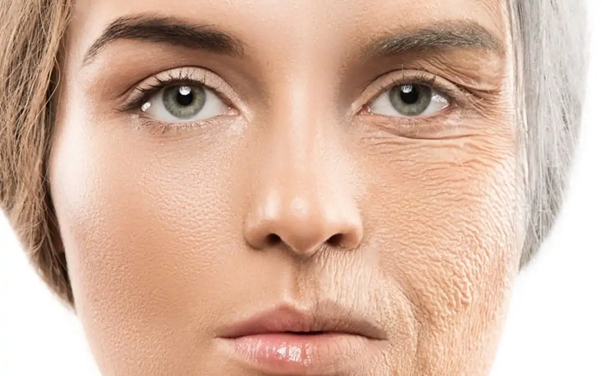
Ageing alters the barrier from within. The epidermis becomes thinner because the cells at the base divide more slowly. Fewer lamellar bodies are produced and those that remain secrete smaller and less complex lipid packets. Studies show that total ceramide content in the outer skin can decline by more than a third between early adulthood and later life. Because ceramides are essential to sealing water inside the skin, this loss leads to increased transepidermal water loss, known as TEWL. As a consequence, the surface feels drier and rougher and loses the supple elasticity associated with youth.
Filaggrin production also decreases with age. Without adequate filaggrin, the pool of natural moisturising factors shrinks, and the surface pH rises. A higher pH alters enzyme activity: those that break down the “glue” between cells become overactive, causing flakiness and uneven texture, while enzymes that generate lipids slow down. The result is a surface that loses cohesion.
At the junction between the dermis and the epidermis, the undulating interface that once anchored the two layers becomes flatter. This reduces the exchange of nutrients and slows communication between cells. Oxygen and vitamins reach the surface less efficiently and repair takes longer.
Exposure and the environment
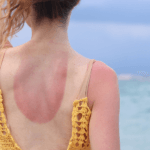
Ageing is shaped as much by exposure as by time. Ultraviolet radiation remains the most powerful external factor. When UV light hits the skin, it oxidises the lipids that make up the barrier, splitting long, stable ceramides into shorter, less effective chains. The lamellar pattern that keeps water locked inside becomes disrupted and microscopic gaps appear.
Photoaged skin contains fewer long-chain ceramides and more short, unsaturated ones that allow water to escape. This is why sun-exposed skin often feels rough and dehydrated even when moisturised. The surface structure itself has been altered.
Pollution compounds the problem. Tiny airborne particles generate reactive oxygen species that damage lipids and proteins. The skin responds with inflammation, releasing mediators known as cytokines intended to repair damage. When this happens repeatedly, inflammation becomes chronic, a phenomenon researchers now call “inflamm-ageing”. This persistent low-grade activity depletes antioxidants such as vitamin E, exhausts repair enzymes and accelerates the breakdown of collagen and elastin beneath the surface.
Humidity and temperature influence the barrier as well. Low humidity reduces the water content of the stratum corneum and suppresses lipid synthesis, while excessive heat increases perspiration and the loss of soluble natural moisturising factors. Both extremes weaken barrier integrity.
Tobacco smoke introduces another set of free radicals and reduces blood flow to the skin. Over the years, it causes a dull, sallow appearance that reflects both vascular and barrier damage. We are now learning that similar issues can also occur as a result of vaping.
Hormones and gender
Hormonal change, particularly the decline in oestrogen during menopause, amplifies many of these effects. Oestrogen regulates the enzymes responsible for producing ceramides and cholesterol. As levels fall, lipid production slows, transepidermal water loss rises and the skin’s pH drifts higher. Post-menopausal skin under the microscope shows a fragmented lamellar structure even in protected areas. This partly explains why the skin of midlife women often feels thinner, drier and more sensitive, even without visible inflammation.
Men experience barrier ageing too, although their thicker dermis and higher baseline sebum output provide some protection in early adulthood. With age, the same mechanisms appear: reduced lipid synthesis, slower repair and greater susceptibility to irritation.
The microbiome shift
Ageing skin supports a different microbial community from younger skin. The gradual increase in surface pH favours opportunistic species that can trigger irritation, while the population of protective bacteria declines. The result is less microbial diversity and a reduced ability to maintain balance after stress. Some of these microbes release enzymes that further degrade lipids, creating a feedback loop between dysbiosis and dryness.
The loss of microbial diversity mirrors what happens in the gut with age. When the ecosystem narrows, resilience falters. Even small environmental changes can provoke disproportionate reactions such as redness or itching.
Inflammation that never switches off
Inflammation is essential to healing, but in ageing skin, it becomes constant. Ultraviolet radiation, pollution and oxidative stress repeatedly activate immune pathways, even when the skin looks calm. The inflammatory messengers designed to repair small injuries start to break down tissue instead.
This persistent activity interferes with the enzymes that synthesise lipids and collagen. Matrix metalloproteinases, which normally remodel connective tissue after injury, remain chronically elevated, eroding the dermal scaffold. The skin becomes less able to hold water and less able to recover from insult.
The process of inflamm-ageing helps explain why mature skin can be both dry and oily, sensitive yet dull. Oil production may persist, but without an intact barrier, the sebum sits on the surface rather than integrating into the lipid matrix. The skin’s chemistry becomes disorganised.
How these changes feel
The scientific details translate into familiar sensations. After cleansing, the skin feels tight. Products that once felt soothing can sting. Moisturisers bring only temporary comfort. These experiences correspond with measurable changes: higher transepidermal water loss, reduced elasticity and slower recovery after minor abrasion.
Barrier fragility also affects how the skin responds to treatment. Ingredients such as retinoids or acids penetrate more quickly through a compromised surface, increasing the risk of irritation. Recovery after aesthetic procedures can take longer because the repair machinery operates more slowly.
Repairing the barrier

Repair begins with replacing what has been lost. Lipid formulations that restore ceramides, cholesterol and fatty acids in roughly equal ratios can rebuild the lamellar pattern and reduce water loss within weeks. Products that replace only one lipid often fail because balance, not abundance, determines function.
Niacinamide is one of the most studied ingredients for barrier repair. It stimulates the enzymes that synthesise ceramides and improves microcirculation, which helps deliver nutrients to the basal layer. Panthenol, or vitamin B5, enhances hydration inside cells, and glycerol attracts water to the intercellular spaces.
Maintaining a healthy pH is equally important. Cleansers with neutral or alkaline bases strip lipids and increase surface pH, while mildly acidic formulations preserve the acid mantle. Restoring acidity helps normalise enzyme activity and supports the microbiome that protects the barrier from pathogens.
Antioxidants such as vitamin E, coenzyme Q10 and ferulic acid help neutralise free radicals before they oxidise membrane lipids. Recent research has found that applying antioxidants after UV exposure reduced lipid peroxidation and preserved barrier integrity.
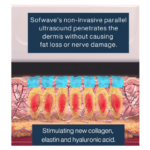
For more significant impairment, medical devices can support recovery. Controlled energy treatments such as non-ablative ultrasound or fractional laser create small zones of heat that stimulate keratinocytes and fibroblasts to produce growth factors and new lipids. The concept is similar to exercise: a small, measured stress prompts the skin to rebuild stronger. When performed within appropriate parameters, these therapies can improve hydration and texture without compromising surface structure.
Lifestyle and systemic factors
Because barrier health depends on internal resources, lifestyle influences are significant. Diets containing omega-3 and linoleic acid provide essential building blocks for ceramides. Diets high in sugar encourage glycation, which stiffens collagen and impedes the movement of nutrients to the epidermis.
Adequate hydration is fundamental. Even mild dehydration affects the lipid matrix’s ability to form properly. Chronic psychological stress elevates cortisol, which suppresses epidermal renewal and slows wound healing. Sleep loss interferes with nocturnal repair processes and antioxidant regeneration.
Environmental moderation matters too. Consistent use of broad-spectrum sunscreen limits UV-driven oxidation. Avoiding cigarette smoke and heavily polluted environments where possible reduces exposure to reactive particles that attack lipids.
Assessing the barrier
Because barrier dysfunction can occur before visible symptoms, diagnostic tools can provide clarity. Instruments that measure transepidermal water loss or surface hydration can identify subtle impairment, while high-resolution imaging systems such as VISIA can map redness and texture that correlate with barrier stress.
Understanding whether the problem is a lack of water, a lack of oil or excessive loss through leakage determines the most effective corrective approach. The science shows that when ceramide levels and surface pH are restored, the skin not only feels more comfortable but reflects light more evenly. What we perceive as “glow” is the optical signature of an intact barrier.
The future of barrier science
Researchers are now exploring how maintaining barrier integrity may influence ageing beyond the skin. The epidermis is not only a physical boundary but also an immune organ. When the barrier leaks, inflammatory mediators can enter the bloodstream, contributing to systemic inflammation. Protecting the skin may therefore help reduce the inflammatory burden associated with ageing in general.
Emerging studies are investigating topical agents that directly stimulate the genes involved in lipid synthesis and keratinocyte differentiation. There is growing interest in probiotic and prebiotic skincare designed to restore microbial diversity. The connection between hormones and barrier health is also gaining attention; understanding how oestrogen, cortisol and thyroid hormones influence lipid metabolism could lead to more individualised approaches to midlife skin.
Redefining what youthful skin means
The research on barrier ageing reframes what it means to have youthful skin. Smoothness and radiance depend less on the depth of wrinkles than on the barrier’s ability to retain water, regulate pH and resist inflammation. A resilient barrier supports every other layer of skin function, from pigmentation to collagen maintenance.
Strengthening the barrier is therefore not an optional extra but the foundation of intelligent care. The same principles apply at every age: protect from excessive sun, avoid harsh cleansers, replenish lipids, preserve acidity and support the microbiome. With these in place, other treatments work better and recovery is faster.
A clinical reflection
In dermatology, maintaining barrier integrity is central to ageing well. It sits at the foundation of every result that endures. At our dermatology clinc on Harley Street, this understanding shapes how we build treatment plans. We begin by restoring structure. Our imaging and diagnostic tools identify where the barrier is failing. Targeted skincare re-establishes lipids and pH. Energy-based treatments such as fractional laser, broadband light and ultrasound strengthen the connection between epidermis and dermis so that the skin functions more like its younger self. The goal is consistent: to bring the barrier back to equilibrium so that every subsequent treatment, from rejuvenation to scar revision, performs better and lasts longer.